The content in this section is supplied by GlobeNewswire for the purposes of distributing press releases on behalf of its clients. Postmedia has not reviewed the content.
You can save this article by registering for free here. Or sign-in if you have an account.
Article content
LAS VEGAS, April 30, 2024 (GLOBE NEWSWIRE) — via IBN – GEMXX Corporation ( OTC: GEMZ ) (“GEMXX” or the “Company”), a leading provider of exquisite gemstones and jewelry announces its plans to expand into proven business channels known to deliver substantial revenue and shareholder value, as well as a change in leadership.
1. Company Refocusing Plan: GEMXX has maintained stable revenues over the past year, despite global instability. The company has been working hard to identify alternative revenue streams that will generate corporate growth and shareholder value.
Advertisement 2
This advertisement has not loaded yet, but your article continues below.
THIS CONTENT IS RESERVED FOR SUBSCRIBERS ONLY
Subscribe now to read the latest news in your city and across Canada.
Exclusive articles from Barbara Shecter, Joe O’Connor, Gabriel Friedman, Victoria Wells and others.
Daily content from Financial Times, the world’s leading global business publication.
Unlimited online access to read articles from Financial Post, National Post and 15 news sites across Canada with one account.
National Post ePaper, an electronic replica of the print edition to view on any device, share and comment on.
Daily puzzles, including the New York Times Crossword.
SUBSCRIBE TO UNLOCK MORE ARTICLES
Subscribe now to read the latest news in your city and across Canada.
Exclusive articles from Barbara Shecter, Joe O’Connor, Gabriel Friedman, Victoria Wells and others.
Daily content from Financial Times, the world’s leading global business publication.
Unlimited online access to read articles from Financial Post, National Post and 15 news sites across Canada with one account.
National Post ePaper, an electronic replica of the print edition to view on any device, share and comment on.
Daily puzzles, including the New York Times Crossword.
REGISTER / SIGN IN TO UNLOCK MORE ARTICLES
Create an account or sign in to continue with your reading experience.
Access articles from across Canada with one account.
Share your thoughts and join the conversation in the comments.
Enjoy additional articles per month.
Get email updates from your favourite authors.
Sign In or Create an Account
or
Article content
Article content
2. Expansion and Innovation: GEMXX Corporation remains committed to expanding its horizons and exploring new growth opportunities. The company continues to identify new markets, strategic ventures and partnerships to drive revenue and shareholder value through untapped opportunities in emerging international markets.
3. Energy Market Exploration: In line with its new strategic expansion plans, GEMXX Corporation is actively in negotiations to expand into energy projects. The company is currently in advance talks with key strategic partners and is evaluating specific opportunities that will diversify its business portfolio and capture new growth opportunities. Through strategic investments and partnerships, GEMXX aims to position itself as a significant player in the energy market. More details to follow.
4. Leadership Transition: With the retirement of Founder Jay Maull, GEMXX Corporation welcomes Richard Clowater as the new Chief Executive Officer (CEO) and Chairman of the Board. Mr. Clowater brings with him a wealth of experience in upstream, midstream and downstream oil and gas projects, coupled with a proven track record of leadership. His strategic vision and innovative approach will drive GEMXX Corporation forward in this dynamic market environment.
Top Stories
Get the latest headlines, breaking news and columns.
By signing up you consent to receive the above newsletter from Postmedia Network Inc.
Thanks for signing up!
A welcome email is on its way. If you don’t see it, please check your junk folder.
The next issue of Top Stories will soon be in your inbox.
We encountered an issue signing you up. Please try again
Article content
Advertisement 3
This advertisement has not loaded yet, but your article continues below.
Article content
Richard Clowater, CEO of GEMXX Corporation, commented, “I am excited to lead GEMXX Corporation during the company’s expansion journey. We are confident in our ability to adapt, innovate, and capitalize on new growth opportunities. With a strong focus on expansion and strategic partnerships, we are well-positioned to navigate the evolving market landscape and drive long-term success for our shareholders.”
ABOUT GEMXX CORPORATION GEMXX Corporation (OTC: GEMZ; $GEMZ) is a publicly traded, mine-to-market gold, gemstone and jewelry producer with global reach that owns mining resources, production facilities and operating assets. GEMXX controls each stage of its production including gold mining, gemstone production, jewelry manufacturing and global distribution.
GEMXX is a leading producer of top-quality finished ammolite and ammolite jewelry. The Company’s world-class gemstone cutters and jewelry designers are continuously leading the Ammolite industry in new and exciting directions. Our management team is made up of the industry’s leading experts with a combined total of 160 years of ammolite gemstone and jewelry business experience.
Advertisement 4
This advertisement has not loaded yet, but your article continues below.
This press release contains forward-looking statements that can be identified by terminology such as “believes,” “expects,” “potential,” “plans,” “suggests,” “may,” “should,” “could,” “intends,” or similar expressions. Many forward-looking statements involve known and unknown risks, uncertainties and other factors that may cause actual results to be materially different from any future results implied by such statements. These factors include, but are not limited to, our ability to continue to enhance our products and systems to address industry changes, our ability to expand our customer base and retain existing customers, our ability to effectively compete in our market segment, the lack of public information on our company, our ability to raise sufficient capital to fund our business, operations, our ability to continue as a going concern, and a limited public market for our common stock, among other risks. Many factors are difficult to predict accurately and are generally beyond the Company’s control. Forward-looking statements speak only as to the date they are made, and we do not undertake to update forward-looking statements to reflect circumstances or events that occur after the date the forward-looking statements are made.
Signed. /S/ Richard Clowater, CEO GEMXX Corporation
MAE SOT, THAILAND – The battle between Myanmar’s military and rebel groups for control of the southeastern border town of Myawaddy has seen thousands of refugees cross into neighboring Thailand in April.
But while many return to Myanmar when there is a lull in the fighting, others are seeking a more permanent escape from the conflict.
Myanmar is experiencing a critical time during its over three-year-long post-coup conflict with rebel groups gaining significant territory and launching unprecedented attacks on the Myanmar regime.
Armed ethnic groups have captured bases in northern Shan state and Rakhine state since October.
The most significant success came via the Karen National Union, or KNU, who earlier in April announced it had forced the surrender of hundreds of Myanmar’s military soldiers who had been in control of Myawaddy.
Soldiers from the Karen National Liberation Army (KNLA) prepare to patrol Myawaddy, the Thailand-Myanmar border town under the control of a coalition of rebel forces led by the Karen National Union, in Myanmar, April 15, 2024.
The junta have since regained a foothold by occupying a base in Myawaddy, but are still fighting to retain full control from the KNU and its allies.
Local media report that junta reinforcements were advancing on Myawaddy as of Monday evening.
The border town connects billions of dollars’ worth of trade passing between Myanmar and Thailand each year.
People gather at a checkpoint near the 1st Thai-Myanmar Friendship Bridge in Myawaddy district in eastern Myanmar, April 12, 2024.
Saw Thoo Kwei is a small business owner in Myawaddy. He said the situation in the town has deteriorated since the recent conflict.
“During a particularly intense period of conflict, I found myself having to seek refuge near the border in Myanmar for one night,” he told VOA. “As the situation gradually cooled down, I returned home. [But] I can’t stay here long because of the conflict,” he added.
Mae Sot, Thailand, is a common place for Myanmar refugees to cross into and safe houses are often used for temporary accommodation, April 23, 2024.
The 30-year-old owns a grocery store in Myawaddy, but the weeks of fighting between government troops and rebels have affected everyday life in the town.
“Currently, there is no policing in Myawaddy, not even traffic police. Most government offices are closed. There is no fighting in the city, but people are living in fear. Many civilians are worried about heavy artillery like mortar shells,” he said.
His business is also suffering from the uncertainty, which has prompted Saw Thoo Kwei to make plans to leave Myanmar.
“Small businesses don’t have many stocks to sell due to road blockages. The fighting in Myawaddy has really hit our business hard. We’re seeing fewer customers, which means sales are down, and sometimes we have to shut the shop.
“With the power cuts and prices shooting up, it’s getting tough. We have to worry about thieves targeting our shop when things get tense, showing how unsafe Myawaddy can be. My only viable option is to relocate to Thailand,” he said.
Since April, the fighting has continued despite the KNU announcing its forces had retreated from one base in the town. The tussle for control of Myawaddy led to at least 1,300 refugees crossing from Myanmar into Thailand, The Associated Press reported on April 20, citing Thai officials.
People cross the Moei river as they flee Myawaddy township in Myanmar to Thailand’s Mae Sot town in Thailand’s Tak province, April 20, 2024.
But that number may be higher as volunteers aiding the refugees told Myanmar Now that 3,000 were returned to Myanmar when fighting in the border town had temporarily quietened.
Thailand shares a 2,400-km (1491-mi) -long land border with Myanmar.
Thailand’s border town Mae Sot, which sits across the Moei river from Myawaddy, has long been accustomed to receiving thousands of people from Myanmar, with many fleeing the war.
Thailand closely watches battle for Myanmar border town
In one undisclosed safehouse in Mae Sot, nearly a dozen Myanmar refugees have fled the conflict in recent weeks.
Kyaw Zin Oo, a physics teacher from the Ayeyarwady region, told VOA he needed to leave Myanmar to avoid being conscripted by the junta.
“I arrived here 17 days ago. I had two choices, to go with the [Myanmar military] or here. I chose to come to Thailand because I see more of a future here. I have friends who have joined the revolution. I thought about joining but I thought I can still support them from here by donations and sending food to them.”
Other refugees, who didn’t want to be identified, said they left Myanmar because the junta had targeted them and their family because of their participation in anti-military protests.
Internally displaced people from Myanmar collect aid sent from Thailand, in Mae Sot, Thailand, April 23, 2024.
Myanmar’s military enacted a conscription law in February that makes 14 million men and women eligible to be drafted into the military and says it will conscript up to 60,000 new recruits a year. The Irrawaddy reports that the military has begun recruiting Rohingya people despite the ethnic minority group suffering appalling atrocities by Myanmar’s military in 2017.
The junta is looking to bolster its ranks so it can resist the momentum gained by rebel groups in recent months.
Myanmar’s Youth Leaders Fear Conscription Law
Chi Lin Ko, a farm worker from Yangon, sits in a bamboo-crafted hut in a highway lay-by in Mae Sot, pondering his next move. The 19-year-old farm worker left Myanmar over a month ago.
But the prospect of fighting for the military spooked him.
“I received a [military conscription] pamphlet at my home. My neighbors joined, but I came here because I didn’t want to join the military. I’ve heard there is a paid salary, but by enlisting in the military there’s no way I can leave after I’ve joined,” he said.
If Chit Lin Ko were to ever pick up arms, it wouldn’t be for the Tatmadaw. “If I didn’t have any family, I would go and fight with the revolutionary groups,” he said.
One of the reasons the teenager left Myanmar was to financially support his family. Myanmar’s conflict has devastated the country’s economy, which is 10% lower than it was in 2019, according to a December report by the World Bank.
“I have a family and need to look after to them, so I need to make money,’ Chit Lin Ko said.
About 1,300 people from Myanmar flee into Thailand after clashes break out in key border town
The U.N. says at least 45,000 Myanmar refugees have entered Thailand since the military coup over three years ago.
Although Thailand’s government has recently pledged to welcome “100,000” Myanmar refugees, Thailand is not party to the 1951 Refugee Convention and has no specific domestic legal framework for the protection of urban refugees and asylum-seekers.
Since the military seized power in Myanmar, nearly 5,000 people have been killed and over 26,000 people arrested, according to rights groups.
Mumbai (Maharashtra) [India], April 30 (ANI): Stock indices closed in negative territory on Tuesday, reflecting a mixed day for investors, after a promising start to today’s trading session. Despite initial gains, both the Sensex and Nifty faced downward pressure by the closing bell. The day saw a fluctuating market, with several key sectors experiencing losses while others managed to hold steady.
The Sensex, India’s benchmark index, closed at 74,482.78, marking a decline of 188.50 points or 0.25 per cent after reaching an intraday and all-time high of 75,111.39.
Similarly, the Nifty 50 concluded at 22,604.85, down by 38.55 points or 0.17 per cent from its 52-week high of 22,783.35.
Among the Nifty companies, 24 witnessed advances while 25 declined. Notable gainers included MM, Power Grid, Shriram Finance, Hero Motocorp, and Bajaj Auto, whereas Tech Mahindra, Tata Steel, Dr. Reddy, Sun Pharma, and HCL Technologies were among the top losers.
While the benchmark indices displayed a downward trend, the broader market indices showed resilience, with the BSE MidCap index rising by 0.48 per cent and the BSE SmallCap index up by 0.16 per cent.
However, over half of the sectoral indices recorded losses, notably the IT, Media, and Metal indices, declining by 1.22 per cent, 1.15 per cent, and 1.04 per cent, respectively.
The Bank index experienced a decrease of 0.13 per cent, accompanied by declines in the Pharma, Healthcare, and OilGas indices by 0.67 per cent, 0.58 per cent, and 0.59 per cent, respectively.
Conversely, the Auto index emerged as the top gainer, advancing by 1.78 per cent, followed by the Realty index, which rose by 1.41 per cent.
Varun Aggarwal, founder and managing director, Profit Idea, said, “Global markets exhibited mixed movements, with Europe’s Stoxx 600 posting marginal fluctuations and Asian markets witnessing varied performances. Samsung Electronics Co. experienced a surge in its stock price following a return to profitability in its semiconductor business.”He added, “Traders maintained a cautious stance amid a flurry of corporate news and earnings reports ahead of the Federal Reserve’s policy decision. Concerns surrounding inflation and the strength of the US economy loomed large.”Key indicators such as the Bloomberg Dollar Spot Index and 10-year Treasury yields remained relatively stable, while SP 500 futures showed minimal change.
Discussions surrounding a possible cease-fire in the West Asia impacted oil prices, while gold remained poised for a third consecutive monthly gain ahead of the Fed meeting. (ANI)
Lawmakers are set to question UnitedHealth’s CEO on the conglomerate’s size following what is likely the US’s largest-ever health-care data breach
Author of the article:
Bloomberg News
John Tozzi, Riley Griffin and Jordan Robertson
Published Apr 29, 2024 • 9 minute read
You can save this article by registering for free here. Or sign-in if you have an account.
UnitedHealth has estimated that the attack could reduce its profit by as much as $1.6 billion this year. Photographer: Gabby Jones/BloombergPhoto by Gabby Jones /Bloomberg
Article content
(Bloomberg) — When a cyberattack on Change Healthcare paralyzed much of the US health-care system, some lawmakers saw it as proof its parent company, UnitedHealth Group Inc., was too big.
UnitedHealth Chief Executive Andrew Witty saw it differently. He has said that the company’s size kept the hack, which crippled a network that handled $2 trillion in health claims a year, from being more harmful. It was “important for the country that we own Change Healthcare,” Witty said earlier this month.
Advertisement 2
This advertisement has not loaded yet, but your article continues below.
THIS CONTENT IS RESERVED FOR SUBSCRIBERS ONLY
Subscribe now to read the latest news in your city and across Canada.
Exclusive articles from Barbara Shecter, Joe O’Connor, Gabriel Friedman, Victoria Wells and others.
Daily content from Financial Times, the world’s leading global business publication.
Unlimited online access to read articles from Financial Post, National Post and 15 news sites across Canada with one account.
National Post ePaper, an electronic replica of the print edition to view on any device, share and comment on.
Daily puzzles, including the New York Times Crossword.
SUBSCRIBE TO UNLOCK MORE ARTICLES
Subscribe now to read the latest news in your city and across Canada.
Exclusive articles from Barbara Shecter, Joe O’Connor, Gabriel Friedman, Victoria Wells and others.
Daily content from Financial Times, the world’s leading global business publication.
Unlimited online access to read articles from Financial Post, National Post and 15 news sites across Canada with one account.
National Post ePaper, an electronic replica of the print edition to view on any device, share and comment on.
Daily puzzles, including the New York Times Crossword.
REGISTER / SIGN IN TO UNLOCK MORE ARTICLES
Create an account or sign in to continue with your reading experience.
Access articles from across Canada with one account.
Share your thoughts and join the conversation in the comments.
Enjoy additional articles per month.
Get email updates from your favourite authors.
Sign In or Create an Account
or
Article content
Article content
Witty is expected to appear at House and Senate hearings on Wednesday. He is likely to be asked whether UnitedHealth, which runs the largest US health insurer, employs thousands of physicians, and manages prescription benefits for millions of Americans, has concentrated too much risk under one roof.
UnitedHealth, which has a market value of $451 billion, has estimated that the Feb. 21 attack could reduce its profit by as much as $1.6 billion this year, making it one of the costliest hacks ever. Merck & Co. said a 2017 cyberattack that was blamed on Russia cost the drugmaker $1.4 billion. The price tag for large disruptive breaches is more often in the tens of millions of dollars.
A company spokesman said in an email that UnitedHealth believes the hack “will likely be the largest health-care data breach in the US to date.”
Much of the Change Healthcare network has now been restored, according to UnitedHealth, and the company has made billions of dollars available to ease the chaos the hack created.
Read More: ‘It Is a Disaster’: Cancer Clinics Reel From US Health-Care Hack
Advertisement 3
This advertisement has not loaded yet, but your article continues below.
Article content
Yet the upheaval persists. Monadnock Community Hospital, in the small town of Peterborough, New Hampshire, has depleted $5 million in reserves and was getting just a fifth of its normal payments until mid-April. The American Medical Association said doctors, especially those with small practices, are still reporting difficulties two months after the hack.
Such disparities highlight a hard truth about health care in the US: When trouble appears, big hospital networks, sprawling pharmacy chains and national insurance plans can usually weather the storm, while patients and smaller players bear higher costs.
“I would’ve never anticipated something like this,” said Richard Scheinblum, Monadnock’s chief financial officer and top cybersecurity official. He said he’s thinking about how he can make the hospital’s information systems more resilient.
“We can’t afford to make mistakes,” he said. “Mistakes hurt people.”
Change Healthcare, which was created through a series of health-technology mergers and acquisitions, was bought by UnitedHealth in 2022 — in a deal the US government tried to block. UnitedHealth is facing a separate US antitrust probe, though the company has continued to pursue deals, including a pact to buy a large Massachusetts-based medical practice.
Top Stories
Get the latest headlines, breaking news and columns.
By signing up you consent to receive the above newsletter from Postmedia Network Inc.
Thanks for signing up!
A welcome email is on its way. If you don’t see it, please check your junk folder.
The next issue of Top Stories will soon be in your inbox.
We encountered an issue signing you up. Please try again
Article content
Advertisement 4
This advertisement has not loaded yet, but your article continues below.
Article content
Functioning as a central node in the health-care system, Change Healthcare carried terabytes of data for doctors, pharmacies, insurers and the government. When hackers broke in, the intrusion showed how it had become a single point of failure that could compromise patients’ privacy and potentially pose a danger to their health.
“As you see more and more of these mergers and gigantic health-care operations, I think you’re creating a systemic risk in terms of cybersecurity,” said Senate Finance Committee Chairman Ron Wyden, an Oregon Democrat.
Indiana Republican Representative Larry Bucshon said at an April House hearing on the hack that “the massive vertical integration in our system” is not “in the best interest of the American people.”
UnitedHealth said its size allowed it to respond “quickly and decisively” to the attack to repair Change’s systems and offer $6.5 billion in assistance for providers. The company said it has communicated regularly with authorities, customers, and others affected, and that it’s working to reach providers who serve vulnerable patients. UnitedHealth said it improved the funding program in response to feedback and that providers in need should reach out for support, including no-cost, interest-free loans.
Advertisement 5
This advertisement has not loaded yet, but your article continues below.
Article content
UnitedHealth “repels an attempted intrusion every 70 seconds,” according to Witty’s prepared testimony for the House Energy & Commerce Subcommittee on Oversight and Investigations, which the panel released on Monday. The company supports minimum security standards for the industry to counter increasingly sophisticated attacks, according to the testimony.
Lack of Clarity
Last year, US authorities thought that they had a notorious hacking group on the run. A confidential source had helped law enforcement infiltrate the systems of the ransomware gang known as BlackCat, or ALPHV, according to a December search warrant. The Federal Bureau of Investigation seized BlackCat sites and built a tool to counter its ransomware.
In response, the hackers reportedly encouraged affiliates to target hospitals and nuclear plants. Intruders slipped into the Change Healthcare network on Feb. 12 through a compromised login, the Wall Street Journal reported, and went undetected for more than a week, extracting data that the company later said “could cover a substantial proportion” of Americans.
Advertisement 6
This advertisement has not loaded yet, but your article continues below.
Article content
UnitedHealth cut Change Healthcare’s connections to the outside world on Feb. 21 and alerted the FBI that afternoon. By late that evening, executives were in touch with top health-agency leaders, discussing what they knew and their options to fix, replace or bypass damaged networks, according to people familiar with the discussions.
At pharmacies across the US, computer systems used to check insurance coverage and process prescriptions went down. While large chains found workarounds, the outage roiled others, and interrupted dispensing at military facilities. As the hack snarled payments, doctors and hospitals said they weren’t getting much information or a clear sense from UnitedHealth of when the problems would be fixed.
Cybersecurity officials who briefed a congressional committee March 13 felt “handcuffed in this instance because of the lack of transparency and lack of information flowing into us” from the company, according to a letter Maryland Democratic Representative Jamie Raskin sent to Witty. HHS in a letter told UnitedHealth to “communicate more frequently and more transparently” with the rest of the industry.
Advertisement 7
This advertisement has not loaded yet, but your article continues below.
Article content
By early March, Change Healthcare’s e-prescribing system was largely restored. In late April, the company said claims were at “near-normal levels” and about 80% of Change’s functions on major platforms were working. UnitedHealth said it paid hackers a ransom to protect patient data, though it didn’t disclose an amount. The company hasn’t notified patients whose data may have been exposed and said it will take months to ascertain.
The financial damage to UnitedHealth has been limited. While its shares are down about 6% since the attack, the $1.6 billion hit it projects this year would come out of an expected annual profit of $24.7 billion, according to estimates compiled by Bloomberg.
Capitol Pressure
Publicly, officials in the Department of Health and Human Services were largely silent immediately after the breach. The agency oversees Medicare and Medicaid, which cover health care for about 150 million people at a cost of $1.7 trillion annually. Insurers that administer those programs, including UnitedHealth, continued to collect premiums, but payments to medical providers stalled.
Advertisement 8
This advertisement has not loaded yet, but your article continues below.
Article content
Andrea Palm, the deputy secretary of HHS, said in an interview that agency leaders have been in touch almost daily with UnitedHealth executives since the hack was discovered. HHS pressed the company to expand its advance-payment program when care providers complained that it was inadequate, she said.
“Ultimately, HHS’s responsibility is to patients and their care, and if providers couldn’t keep their doors open that was a problem for patient care,” said Palm, who noted that the agency set up its own effort to get money into providers’ hands. “We pushed them hard to expand that program.”
Read More: Hackers Roil Entire Industries With Attacks on IT Supply Chain
Still, lawmakers including Senate Majority Leader Chuck Schumer, the New York Democrat, were pushing the Biden administration to act. HHS made its first statement on the attack on March 5, urging insurers to loosen prior-authorization requirements and telling administrators of government health programs to help providers find workarounds while Change’s systems were down.
Senator Maggie Hassan, the New Hampshire Democrat, discussed the hack with President Joe Biden when he visited her state on March 11. Some rural hospitals told Hassan 98% of their cash flow vanished after the hack.
Advertisement 9
This advertisement has not loaded yet, but your article continues below.
Article content
“I think about the fact that I needed to reach out to the President of the United States and the Secretary of Health and Human Services to bring them into this conversation too, because UnitedHealthcare is so large and has such an impact across the country,” Hassan said in an interview.
Hassan, a member of the Senate Finance Committee that is expected to hear testimony from Witty, said the US should consider what is needed “so that an attack on one of these very large operators doesn’t put at risk such a huge proportion of our health-care system, and ultimately put patients at risk.”
After Hassan brought her concerns to Biden, top administration officials met with Witty and health trade groups. Hassan pressed Witty to get cash into hospitals’ accounts. UnitedHealth made the terms of a provider loan program less burdensome.
Hassan met with hospital executives in her Manchester office on March 15. Scheinblum, the Monadnock CFO, told her he was still struggling to get assistance from UnitedHealth. That afternoon, a top executive reached out to him, and a $2 million advance was on the way.
Advertisement 10
This advertisement has not loaded yet, but your article continues below.
Article content
Financial Fallout
The fallout from the hack was widespread and its effects have lingered, especially where financial setbacks are harder to brush off.
Patients calling safety-net clinics in Philadelphia couldn’t get through when call centers outsourced to Change went down. North Carolina Medicaid officials held daily briefings on the situation, which they felt posed high risks to beneficiaries.
Some companies expect extended logjams. Option Care Health Inc., a publicly traded infusion business with $4.3 billion in annual revenue, said in a March 14 filing that more than half its claims hadn’t been processed since the hack. This month, it said it expected its cash collection backlog to stretch into the third quarter.
Small practices face acute challenges. Angeli Maun Akey, a primary-care doctor in Gainesville, Florida, was mostly unaware of the cyberattack until she went to pay her 19 employees in early March. She found that the $25,000 a week that usually flowed into the clinic’s account had dwindled to less than $6,000.
Akey told her family she might need to close or sell the clinic, where she had “grown old together” with patients over 25 years of practicing in her hometown. To get cash, she sold retirement investments and started asking patients at the front desk to advance her $45 when they came in.
Advertisement 11
This advertisement has not loaded yet, but your article continues below.
Article content
“People came and dropped checks for $100, $200, $2,000,” she said. The generosity helped her keep her doors open. Akey also got advances from Medicare and other companies she works with, but a glitch delayed assistance from UnitedHealth: On April 25 she was approved for a loan of $31,000, an amount she said is inadequate.
Across the US, there are similar stories. Anastasia Taylor, a social worker and therapist, started a nonprofit clinic called EmpathyHQ in the Dallas-Fort Worth area in 2013. Taylor accepts insurance, unlike many mental-health care providers. But when the Change network went down, several dozen prospective patients left and never returned after being told there was no way to verify their coverage.
“We are here to help and our mission is being clouded by actions outside of our control,” said Taylor. “It’s incredibly frustrating and heartbreaking because we don’t know if any of those people will ever come back.”
—With assistance from Sana Pashankar.
(Updates with CEO’s prepared testimony for US House panel in 16th paragraph)
New Delhi [India], April 29 (ANI): The Reserve Bank of India (RBI) has issued master directions for entities operating on electronic trading platforms, aiming to regulate and streamline the activities in electronic trading.
The move comes as part of the RBI’s ongoing efforts to enhance transparency and efficiency in financial markets.
According to the guidelines, these directions will not apply to electronic systems operated by scheduled commercial banks and standalone primary dealers for transactions in eligible instruments, where the bank or primary dealer operating the electronic system is the sole quote.
The exemption is specifically granted to scheduled commercial banks and standalone primary dealers for transactions in eligible instruments where they act as the sole quote provider. This provision is likely to facilitate smoother trading operations for these entities.
The master directions also provide a definition of ‘Algorithmic trading’ or ‘Algo trading,’ which refers to any trade originated by a software program using automated execution logic.
This definition aims to clarify and standardize the understanding of algorithmic trading within the industry.
Algorithmic trading has gained significant traction in financial markets due to its speed and efficiency in executing trades.
However, concerns have been raised regarding the potential risks associated with algorithmic trading, such as market manipulation and sudden price fluctuations.
By providing a clear definition of algorithmic trading, the RBI aims to establish a framework that enables effective oversight and regulation of such trading activities.
The issuance of these master directions underscores the RBI’s commitment to fostering a well-regulated and transparent financial ecosystem.
It also reflects the central bank’s proactive approach to adapting regulations to keep pace with technological advancements in the financial sector.
Market participants and entities operating on electronic trading platforms are expected to adhere to these guidelines to ensure compliance with regulatory requirements and to promote the integrity and stability of the financial markets. (ANI)
BEIJING, April 29 (Xinhua) — The following is a summary of published science and technology news of China.
SPACE STATION HANDOVER
China’s Shenzhou-17 crew held a handover ceremony with the Shenzhou-18 crew and transferred the keys of the country’s space station to the latter on Sunday.
Up to now, the Shenzhou-17 crew has completed all planned tasks. The three astronauts will return to the Dongfeng landing site in north China’s Inner Mongolia Autonomous Region on April 30, according to the China Manned Space Agency.
LIQUID PROPULSION TEST
China has successfully completed an ignition test for its liquid-propellant engine with the highest thrust, according to the China Aerospace Science and Technology Corporation (CASC).
This marks a new breakthrough in the country’s liquid propulsion development. It is also the first-ever parallel ignition test of four large-thrust liquid oxygen (LOX) kerosene engines.
The 130-tonne class LOX kerosene engine, developed by the CASC, has a total thrust of over 500 tonnes. Compared to the currently operational 120-tonne class LOX kerosene engines, it not only boasts a larger thrust and better performance, but also a more compact structure, effectively enhancing the rocket’s carrying capacity.
DEEP SEA MICROBE
Chinese marine scientists have identified a plethora of previously unknown microbial natural products from the deep sea floor that may have pharmaceutical applications.
In the cold seeps of the deep sea, microbial communities thrive on the geological seepage of hydrocarbons and inorganic compounds for sustenance, in stark contrast to the sunlight-dependent ecosystems that people are more familiar with on the surface.
These organisms utilize biosynthetic gene clusters (BGCs) to synthesize natural products that help them contend for resources. These unknown natural products are believed to possess potent anti-microbial properties, which could be a game-changer in the fight against drug-resistant infections.
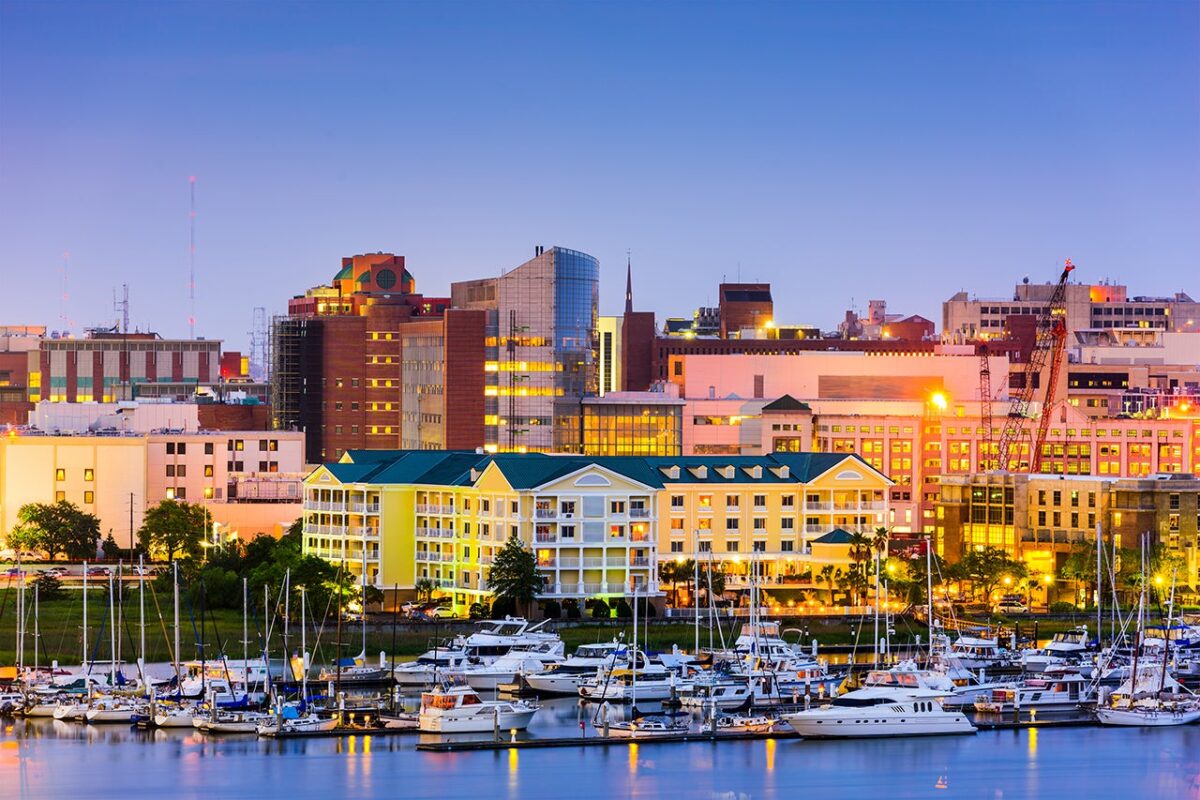
Frequent cruisers are likely familiar with popular East Coast cruise ports, such as Boston, Baltimore, New York City and Cape Liberty in Bayonne, New Jersey. But did you know you can also cruise from the Carolinas? The cruise port in Charleston, South Carolina, is a driveable distance from several cities, including Charlotte (three hours) and Raleigh (four hours) in North Carolina.
Charleston might not be a bustling cruise home port like PortMiami, but the city is a destination in its own right. And if you’re sailing with American Cruise Lines or Carnival Cruise Line, you’ll find plenty to do in the Holy City before or after your cruise.
Plus, the Port of Charleston is easy to get to from Charleston International Airport (CHS), and the city offers a good selection of points hotels for a pre- or post-cruise stay.
For more cruise news, guides and tips, sign up for TPG’s cruise newsletter.
Here’s everything you need to know about cruising from the Port of Charleston.
Currently, two cruise lines depart from the Port of Charleston.
Daily Newsletter
Reward your inbox with the TPG Daily newsletter
Join over 700,000 readers for breaking news, in-depth guides and exclusive deals from TPG’s experts
American Cruise Lines‘ Historic South & Golden Isles Cruise and Holidays in the Southeast cruise depart from Charleston. Additionally, Carnival Cruise Line‘s Carnival Sunshine cruises out of Charleston on round-trip four- to 10-night sailings to the Bahamas and Eastern Caribbean.
Charleston also serves as a port of call on repositioning cruises or longer East Coast and Bahamas/Bermuda itineraries with cruise lines such as Viking, Regent Seven Seas Cruises and Royal Caribbean.
The Port of Charleston is 12 miles (about 25 minutes) from Charleston International Airport (CHS). Various airlines fly to CHS from other U.S. cities, including American Airlines, Delta Air Lines, JetBlue, Alaska Airlines, United Airlines, Southwest Airlines, Spirit Airlines and Frontier Airlines.
Your disembarkation time might not align with your outbound flight time. So, if you have time to kill at the airport, you can spend it at The Club CHS lounge. The lounge is in the main terminal on the second level toward Concourse B. A daypass is $50 per person unless you have a Priority Pass membership through premium credit cards like the Chase Sapphire Reserve® or The Platinum Card® from American Express (enrollment required). AAA members get in at a discounted rate of $42.50.
How to get to the Port of Charleston
You have a few options for getting to the cruise port from the airport or a hotel in Charleston.
Hotel shuttles
On-site parking isn’t available at every hotel in downtown Charleston, so leaving your car at the hotel while you cruise likely won’t be the best way to go. However, some area hotels offer shuttle service to the port or provide complimentary transportation within a certain distance from the property. For example, The Dewberry Charleston offers guests complimentary transportation within 5 square miles of the hotel via its Volvo house cars. The cruise port is just over a mile from the hotel.
When you are choosing a pre-cruise hotel, inquire about transportation to the cruise port before you make your reservations.
Independent van/car services
You can arrange private pickup and drop-off through car and van services like GCT Chauffeured Services, which will cost between $100 and $199 for up to three people.
Taxis and ride-hailing services
Hailing a taxi to get to the Port of Charleston is simple. At the airport, taxi service is at the center median just outside baggage claim. Taxis charge a $17 minimum fee from CHS. Taxi fares are based on a trip meter rate of $3 per mile, which includes up to two passengers. You’ll either pay the $17 minimum or the fee displayed on the meter at the end of the trip (whichever is the greater amount). Additional passengers are $7 per passenger, per trip. Based on taxi rates in Charleston and the distance from the airport to the cruise port, the estimated fare is $30 to $40.
Ride-hailing services such as Uber and Lyft are also an option. Follow the signs outside the baggage claim area to the sheltered pickup area across both roadways. You’ll find it to the right of the last sidewalk.
Public transportation
Charleston’s public bus service, Charleston Area Regional Transportation Authority, does not currently provide a convenient station or stop to the cruise port.
Port of Charleston parking
The majority of cruisers sailing out of the Port of Charleston will be driving to the port, arriving the day of departure or the night before. Therefore, the port offers plentiful on-site parking.
Long-term parking for cruise passengers’ vehicles at the port does not require reservations. Parking is located within a gated area available only to cruise passengers and not the general public, and port police secure and patrol the site during the cruise.
A complimentary shuttle bus runs between the vehicle parking areas and the passenger terminal on both departure and return dates of the cruise.
The cost for parking standard-size vehicles is $21 per day. The parking fee for oversize vehicles longer than 20 feet (campers, recreational vehicles, buses) is $50 per day. You can pay for cruise parking with a credit card, debit card or money order. Cash is no longer accepted as payment for parking.
The Port of Charleston provides free parking for vehicles displaying a valid accessible parking placard or license plate with ID. Wheelchair services are available inside the terminal. Alert a cruise port staff member for assistance.
Off-site parking is available with private companies like Park & Go, which offers cruise parking for $10 per day. It does not provide shuttle transportation from the lot to the cruise terminal, so you would need to take a taxi or Uber to the port.
A public parking garage is also an option. The maximum rate is $18 per day. The Cumberland Street parking garage (90 Cumberland St.) is the closest one to the port, less than a mile away.
The Charleston area offers an abundance of hotels, including some properties at which you can use or earn points. Whether you want convenient access to the cruise port and the city’s historic downtown or to enjoy a riverfront pre- or post-cruise stay, here are a few to consider.
Hilton hotels near the Port of Charleston
For a quick overnight before a cruise, the Hilton Garden Inn Charleston Waterfront/Downtown is an ideal option (41,000 to 60,000 Hilton Honors points per night).
Its location on Ashley Marina provides easy access to the Charleston Historic District and other downtown attractions, and it’s just under 2 miles from the cruise port. Amenities include an outdoor pool, a fitness center and free breakfast.
If you’re looking for an upscale stay, Mills House Charleston, Curio Collection by Hilton is an excellent choice (80,000 to 459,000 Hilton Honors points per night). It exudes laid-back luxury with a distinctly Southern style, and the rooftop pool bar area is a prime spot for spectacular views of Charleston’s steeple-filled skyline.
For Marriott Bonvoy loyalists, there’s the Courtyard Charleston Waterfront (30,000 to 59,000 Marriott Bonvoy points per night), which sits about 3 miles from the cruise port. On certain dates throughout the year, you can also use a Marriott 35,000-point free night certificate to cover a stay here.
Relax by the fire pit, or take a dip in the outdoor waterfront pool. The Bistro is the hotel’s only restaurant, but it also serves specialty Starbucks beverages if you can’t function without your morning caramel macchiato latte.
For a boutique hotel experience, book a stay at The Lindy Renaissance Charleston Hotel, available from 40,000 to 81,000 Marriott Bonvoy points per night. An outdoor saltwater pool and upscale on-site dining venues like Vivian Howard’s Handy & Hot and Lenoir are among many reasons to overnight here before or after your cruise.
Hyatt hotels near the Port of Charleston
Hyatt Place Charleston/Historic District is a lovely hotel right in the heart of Charleston’s historic area and within walking distance of area restaurants, bars and shopping. It also has a rooftop bar area for a nightcap with nice city views. Nights start at 12,000 World of Hyatt points, and your stay includes free breakfast.
Non-points hotels near the Port of Charleston
THE BEACH CLUB AT CHARLESTON HARBOR RESORT & MARINA/FACEBOOK
Charleston teems with hotels that don’t participate in traditional loyalty programs. When it comes to those, here are a few of our favorites.
For a mid-mod vibe, check out The Dewberry Charleston. Overlooking Marion Square, the hotel is convenient to King Street shopping, restaurants and historic sites.
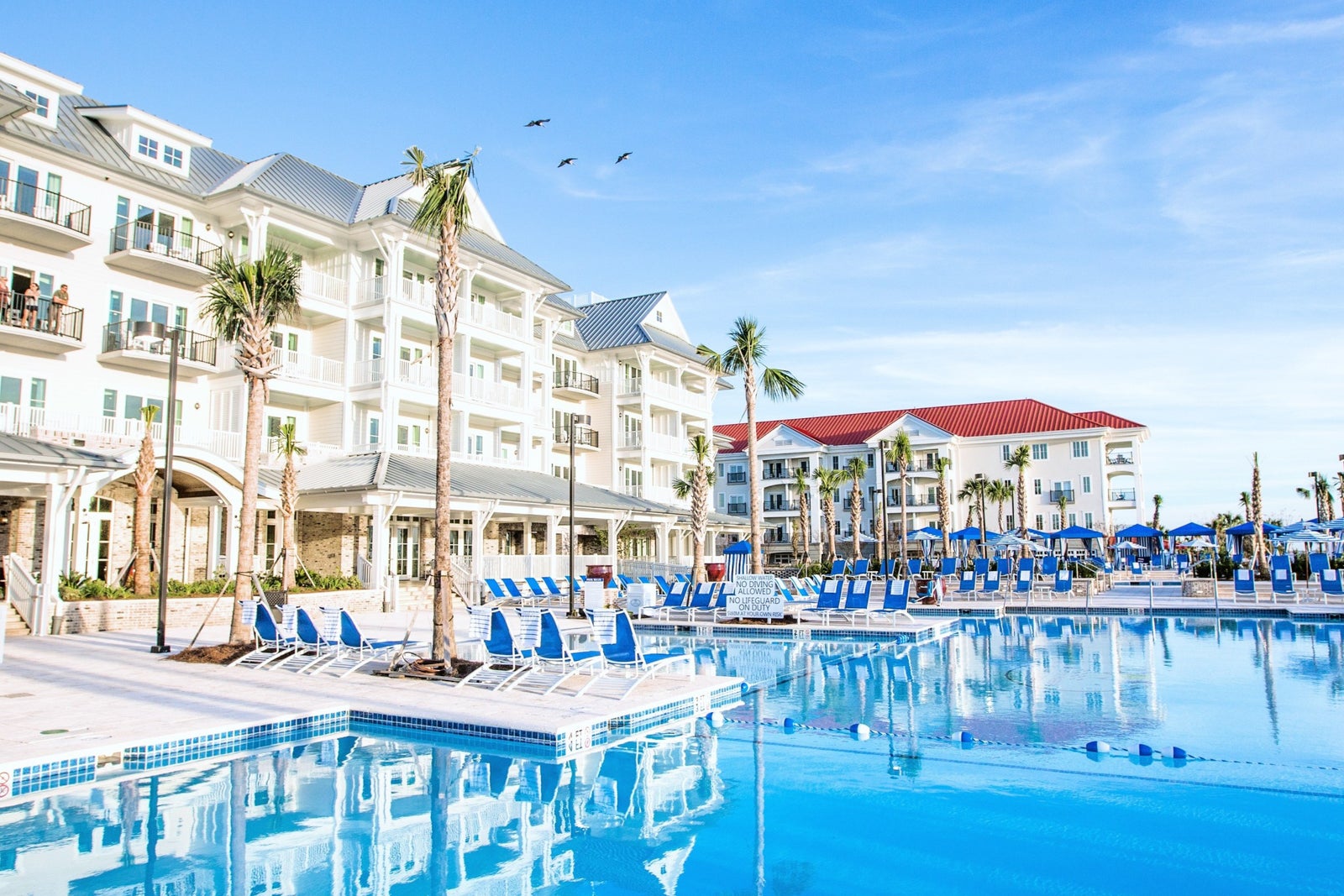
Families will love the resort-style vacation atmosphere of The Beach Club at Charleston Harbor Resort & Marina. Though not located downtown, it’s right on the water, with taxi service from the marina to the city center.
Charleston lands on many “best foodie destination” lists — and for good reason. Visitors can choose among just-caught seafood, local Lowcountry cuisine and upscale meals from James Beard Award-winning chefs. The Port of Charleston is convenient to the historic downtown area, so cruisers will find a bevy of destination dining and solid local eateries within walking distance or a short taxi ride away.
Fleet Landing Restaurant & Bar (186 Concord St.), the place for fresh seafood and waterfront views, is right next door to the cruise port. Head to Poogan’s Porch (72 Queen St.) for traditional Southern dishes served in a historic Victorian home (five minutes from the port). Other options within a 10-minute drive of the port include Chubby Fish (252 Coming St.) or local favorites like Rodney Scott’s BBQ (1011 King St.) and Cru Cafe (18 Pinckney St.).
Things to do in Charleston before or after your cruise
Sulllivan’s Island, South Carolina. EXPLORE CHARLESTON
Charleston tops many “best destinations” lists thanks to its array of historic sites, cultural attractions and natural diversions. If you decide to spend more time in the Holy City before or after your cruise, here are some things to do in Charleston.
Hit the beach
The city of Charleston is on a peninsula surrounded by a harbor, so there’s no beach access within its limits. However, if you crave a little extra sand time, you’ll find some popular beaches within a fairly short drive.
A little over 9 miles (about 20 minutes) from Charleston, Sullivan’s Island is a charming beach town that offers wide beach areas with water sports opportunities (kayaking, paddleboarding and sailing). Peruse local shops, or explore history at Fort Sumter and Fort Moultrie National Historical Park.
Folly Beach is less than 12 miles (about 21 minutes) from downtown. Its 6 miles of beach provide plenty of room for shelling, surfing or shark-tooth hunting. Or, take a guided kayak tour to Lighthouse Inlet Heritage Preserve for a closer look at the historic Morris Island Lighthouse.
Visit the International African American Museum
This 150,000-square-foot museum houses more than 150 artifacts, artwork and interactive digital exhibits that chronicle the survival and resilience of slaves who likely made their way to Charleston through Gadsden’s Wharf, the country’s largest slave auction site from 1772 to 1808. The museum resides on that site (Gadsden’s Wharf, 14 Wharfside St.).
Explore the aquarium
Cruising with the kids? Families will want to check out the South Carolina Aquarium (100 Aquarium Wharf), less than a mile from the cruise port (about a four-minute drive). The waterfront facility is home to more than 5,000 animals, including rehabilitating sea turtles in the Zucker Family Sea Turtle Recovery facility. Two touch tanks hold sharks, horseshoe crabs, stingrays and sea stars. The aquarium also hosts daily dive shows and rotating exhibits.
Take in some art
If you’re into art, two Charleston museums should definitely be on your radar. The three-story Gibbes Museum of Art (135 Meeting St.) is the oldest museum facility in the South. Here, you’ll find a collection of more than 10,000 paintings, sculptures, photographs and furniture.
Head to the Halsey Institute of Contemporary Art at the College of Charleston (161 Calhoun St.) to peruse innovative works of emerging artists, seasonal shows and rotating exhibits. Admission is free.
Pick up last-minute cruise items at Tanger Outlets Charleston (4840 Tanger Outlet Blvd.), about a seven-minute drive from CHS. Harris Teeter (290 East Bay St.) is less than half a mile from the cruise port, should you wish to grab snacks, drinks and other groceries.
If souvenirs or upscale items are on your list, spend some time along Charleston’s iconic King Street. Retailers like Free People, Urban Outfitters and Kate Spade line the cobblestone street along with locally owned shops offering jewelry, home goods and Charleston-branded items.
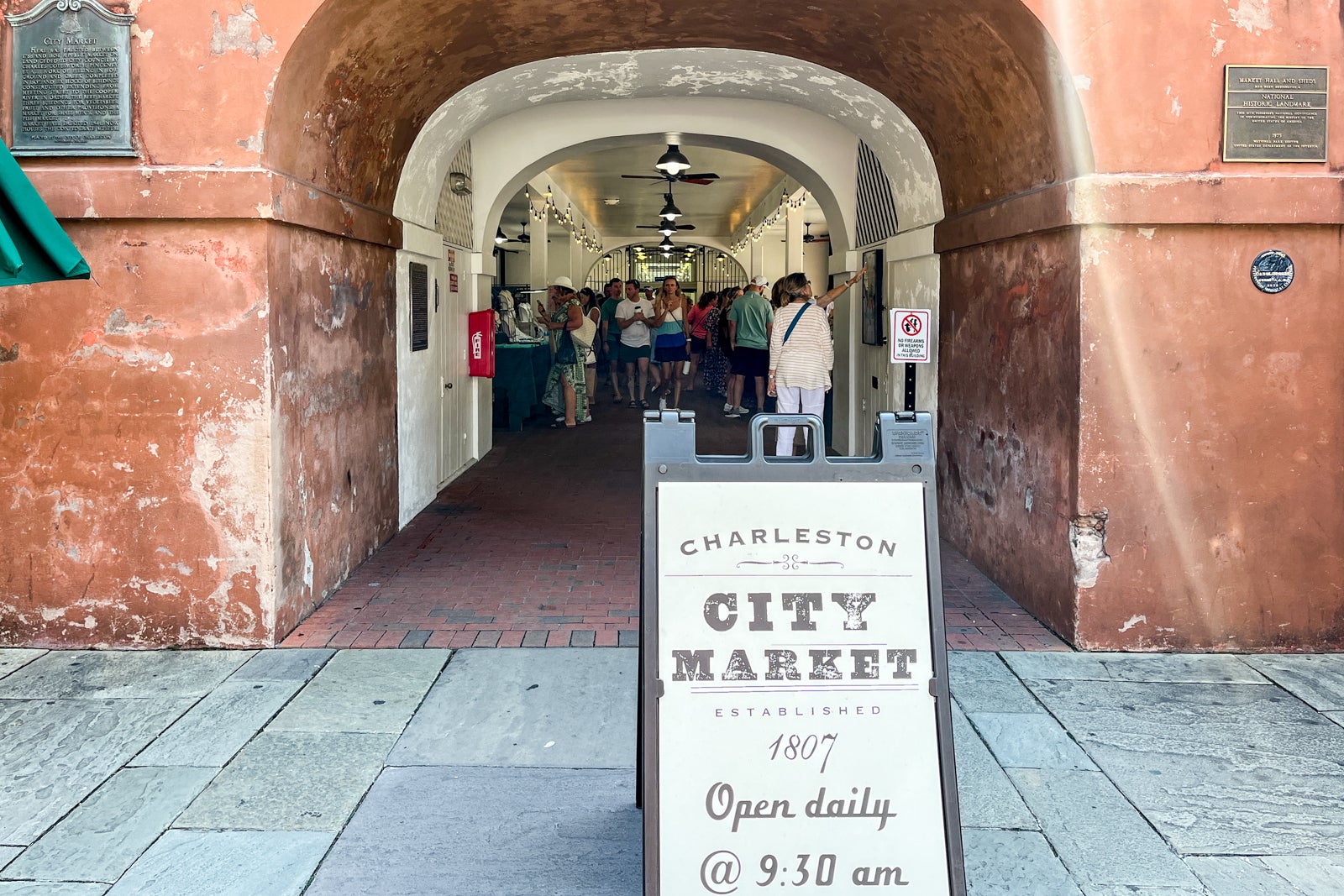
One of the city’s most popular attractions is the historic Charleston City Market (188 Meeting St.). The open-air spot showcases local artisans selling paintings, spices and crafts, including hand-woven sweetgrass baskets.
New Delhi [India], April 28 (ANI): Tesla CEO Elon Musk announced on Sunday that Tesla will spend about USD 10 billion this year on training and inference artificial intelligence (AI).
The Tesla CEO and SpaceX founder said in a post on ‘X’, “Tesla will spend around $10B this year in combined training and inference AI, the latter being primarily in car. Any company not spending at this level, and doing so efficiently, cannot compete”.
Musk’s tweet highlights the critical importance of this investment for Tesla’s competitiveness in the automotive industry. He also asserted that any company failing to match or exceed this level of investment in AI, while ensuring efficiency, will struggle to remain competitive.
The allocated funds will be utilised to advance AI capabilities of Tesla’s cars. The investment will have a primary focus on enhancing self-driving capabilities in cars and the Robotaxis.
The announcement by Musk will further improve the technological advancements in self-driving technology and AI integration within the automotive sector.
This significant investment signals a future with AI-powered autonomous driving. With Tesla’s substantial investment, the company aims to accelerate progress in AI-driven technologies, particularly in-car inference AI.
The announcement sets a high bar for competitors, signaling a new phase of intense competition in AI development within the automotive industry.
Last week Tesla had also reduced the prices of its U.S models. The company reduced prices of its Model Y, Model X and Model S vehicles by USD 2,000 each this week, days after the first-quarter deliveries of the automaker missed market expectations, reported Reuters.
The EV maker reported that in April month its global vehicle deliveries in the first quarter fell for the first time in nearly four years as price cuts failed to stir demand. (ANI)
Canadian dollar could sink to 50 cents decade from now
Article content
Jean-François Tardif, founder of Timelo Investment Management, speaks with Financial Post’s Larysa Harapyn about how the 2024 federal budget could impact the Canadian economy. Tradif warns that Canada’s lagging productivity could drag down the Canadian dollar over the next decade.
Article content
Gold could go as high as US$3,000
John Ciampaglia, chief executive at Sprott Asset Management, talks about how gold has decoupled from its usual drivers as central banks in the east snatch up the yellow metal.
We apologize, but this video has failed to load.
How Canada, Ontario got it right with the Honda deal
With news that Canada has reached a deal with Honda Motor Co. Ltd. for a multi-billion EV complex, Dr. Greig Mordue, associate professor at McMaster University, explains how past deals were too expensive and how it looks like this time governments got it right.
Bookmark our website and support our journalism: Don’t miss the business news you need to know — add financialpost.com to your bookmarks and sign up for our newsletters here.
New Delhi[India], April 28 (ANI): According to market analysts, the uptrend in the stock market may continue for the coming week after the US markets showed a robust performance on Friday.
The coming week will be dominated by the corporate earnings releases and the highly anticipated Federal Open Market Committee (FOMC) meeting scheduled for April 30 to May 1.
The experts highlighted that overall Asian markets are poised to carry forward the bullish sentiment as April draws to a close, despite looming challenges anticipated for May.
“We expect positive markets this week, driven by continued corporate earnings catalysts, and In India, we expect sideways to slightly positive markets this week. The strong earnings and guidance from US Big Tech bolstered the market last week said Ajay Bagga, Market and Banking expert.
“Nifty continues to remain in an uptrend in the medium term. For the week, we expect Nifty to trade in the range of 22900-22000 with mixed bias” said Rajesh Palviya SVP Research (Head TechnicalDerivatives) Axis Securities Ltd.
He further added that the chart pattern suggests that if Nifty crosses and sustains above 22600 level it would witness buying which would lead the index towards 22800-22900 levels.
The anticipated rate cuts by the Federal Reserve in 2024 are expected to diminish real yields, rendering gold and silver more appealing as non-yielding assets, and the continuous global uncertainties, encompassing geopolitical tensions and economic instabilities, bolster the allure of gold and silver as safe-haven assets and can pose a risk on the market.
In the last week, the benchmark indices continued positive momentum, the Nifty ended 1.23 percent higher while the Sensex was up by 642 points.
Among sectors, all the major sectoral indices registered buying interest but the PSU Bank index outperformed and gained 6.5 percent. During the week, the market bounced back sharply but on last Friday it witnessed profit booking at higher levels. (ANI)






 People gather at a checkpoint near the 1st Thai-Myanmar Friendship Bridge in Myawaddy district in eastern Myanmar, April 12, 2024.
 Mae Sot, Thailand, is a common place for Myanmar refugees to cross into and safe houses are often used for temporary accommodation, April 23, 2024.
 People cross the Moei river as they flee Myawaddy township in Myanmar to Thailand’s Mae Sot town in Thailand’s Tak province, April 20, 2024.
 Internally displaced people from Myanmar collect aid sent from Thailand, in Mae Sot, Thailand, April 23, 2024.