NEW DELHI, April 24 (Xinhua) — India’s central bank, the Reserve Bank of India (RBI), on Wednesday announced a “supervisory action” on a private bank, the Kotak Mahindra Bank, directing it to cease and desist with immediate effect from onboarding of new customers through its online and mobile banking channels, including issuing fresh credit cards.
The bank shall, however, continue to provide services to its existing customers, including its credit card customers, said an official statement of the RBI.
The Kotak Mahindra Bank has over 1,800 branches across India with a customer base of more than 48 million. It received the banking license from the RBI in 2003, thus becoming the first non-banking finance company in India to convert into a bank. The bank currently offers services ranging from commercial banking, stock broking, and mutual funds to insurance and investment banking.
The central bank said the measure was necessitated based on significant concerns arising out of its IT Examination of the bank for 2022 and 2023, and the continued failure on part of the private bank to address these concerns in a comprehensive and timely manner.
The RBI statement said the private bank was found to be significantly non-compliant with the Corrective Action Plans issued by the central bank for 2022 and 2023, as the compliances submitted by the bank were found to be either inadequate, incorrect or not sustained.
In many respects, 2023 was a record-setting year at airports. The Transportation Security Administration saw its busiest summer ever. All-time, single-day passenger traffic records fell on two occasions. Airlines fielded historic demand for overseas travel, prompting carriers to shift their schedules to meet an enduring craving for travel.
But it remains a very different story at many of America’s smallest airports.
Nearly four years after the pandemic shuttered air travel and helped precipitate a pilot shortage that had been brewing for years, travelers in many rural and midsize communities have far fewer flight options than they did before March 2020.
Take Williamsport, Pennsylvania, as an example: To get to the nearest major hub, you have to drive three hours to Philadelphia.
Before the pandemic, there was no need for the trek. You could just fly out of Williamsport Regional Airport (IPT).
Sure, you’d have to make a connection at Philadelphia International Airport (PHL), but with that one stop, you could easily be on your way to the West Coast, Europe or elsewhere.
But those days are long gone. Today, no major carrier flies out of IPT … and it’s been that way there — and at far too many other airports across the country — for a few years now.
Daily Newsletter
Reward your inbox with the TPG Daily newsletter
Join over 700,000 readers for breaking news, in-depth guides and exclusive deals from TPG’s experts
Dwindling service at smaller airports
After some back-and-forth at the height of the pandemic, American Airlines — then Williamsport’s only major airline — decided in 2020 to drop service at IPT for good, citing pandemic-era head winds.
“It was a long two years trying to figure out what we could do next,” Richard Howell, IPT’s executive director, acknowledged in a recent interview with TPG.
Howell ran into dead ends as he tried to lure an airline back to the city. A key challenge: Others were trying to do the same.
Since 2020, airlines have exited at least 121 markets nationwide, according to the Regional Airline Association, which advocates for regional carriers — including smaller airlines like SkyWest Airlines, PSA Airlines, Republic Airways and Horizon Air — that feed into larger network carriers and fly between big hubs and smaller communities under names like American Eagle, Delta Connection and United Express.
An American Eagle regional jet operated by PSA Airlines at Philadelphia International Airport (PHL). SEAN CUDAHY/THE POINTS GUY
Pilot shortage
As TPG has reported for two years, regional carriers were hit especially hard by the nationwide pilot shortage. When travel ramped back up after the down days of the pandemic, the big “mainline” airlines went on hiring sprees, replenishing their ranks after offering pilots buyouts and early retirements in 2020.
When they hired, they often hired away from the regional carriers, where many pilots begin their careers.
On top of that siphoning off the regional airlines’ staff, the larger carriers are increasingly using fewer — but larger — planes to transport more passengers. That’s made the landscape even more of an uphill climb for communities like Williamsport, which is capable of filling a small aircraft but likely not a larger one.
“For a small market like ours that’s ideally suited for a 50-seat jet, that was really problematic,” Howell said.
Service cuts have mounted
The results are troubling.
Nationwide, a dozen airports have lost all commercial service in recent years, according to the RAA. Thirty-seven airports have lost at least half. Many more still have service but have seen their number of flights drop significantly.
Through the first six months of 2024, Ithaca Tompkins International Airport (ITH) in New York will see airlines offer 34% fewer seats than that same period in 2019, according to data from aviation analytics firm Cirium. That’s despite the airport’s having undergone a $34.8 million renovation that wrapped up in 2019, which more than doubled the size of the terminal and saw the airport go from one jet bridge to four.
ROBERT A STANTON, STREETER ASSOCIATES/ITHACA THOMPKINS INTERNATIONAL AIRPORT
It’s not just ultrarural communities, either.
During the first half of this year, seats from Eugene F. Kranz Toledo Express Airport (TOL) in Ohio are down 51% from 2019. They’re down 64% at Joplin Regional Airport (JLN) in southwest Missouri; down by 31% at Fayetteville Regional Airport (FAY) in North Carolina, near Fort Liberty (formerly Fort Bragg); and down by 36% at Dayton International Airport (DAY) in Ohio, which is near Wright-Patterson Air Force Base — not to mention the former home of the Wright brothers.
“Dozens of airports continue to have less than half the flights they had before the pandemic. And a quarter of the country is still missing, on average, 1 in 4 flights,” RAA CEO Faye Malarkey Black told TPG, noting that some 400 regional jets nationwide are parked. The ones that aren’t parked are underused.
Examples of airports that have lost significant service
Airport
% of departing seats lost (first 6 months of 2024 vs. 2019)
Del Rio International Airport (DRT), Texas
-100%
Easterwood Airport (CLL); College Station, Texas
-34%
Evansville Regional Airport (EVV), Indiana
-27%
La Crosse Regional Airport (LSE), Wisconsin
-57%
Lansing Airport (LAN), Michigan
– 30%
Lincoln Airport (LNK), Nebraska
-33%
Manchester-Boston Regional Airport (MHT), New Hampshire
-31%
Meridian Regional Airport (MEI), Mississippi
-45%
Sioux Gateway Airport (SUX); Sioux City, Iowa
-43%
Central Wisconsin Airport (CWA); Wausau, Wisconsin
-30%
Data sourced from Cirium Diio
A challenge for travelers and communities
It takes a toll.
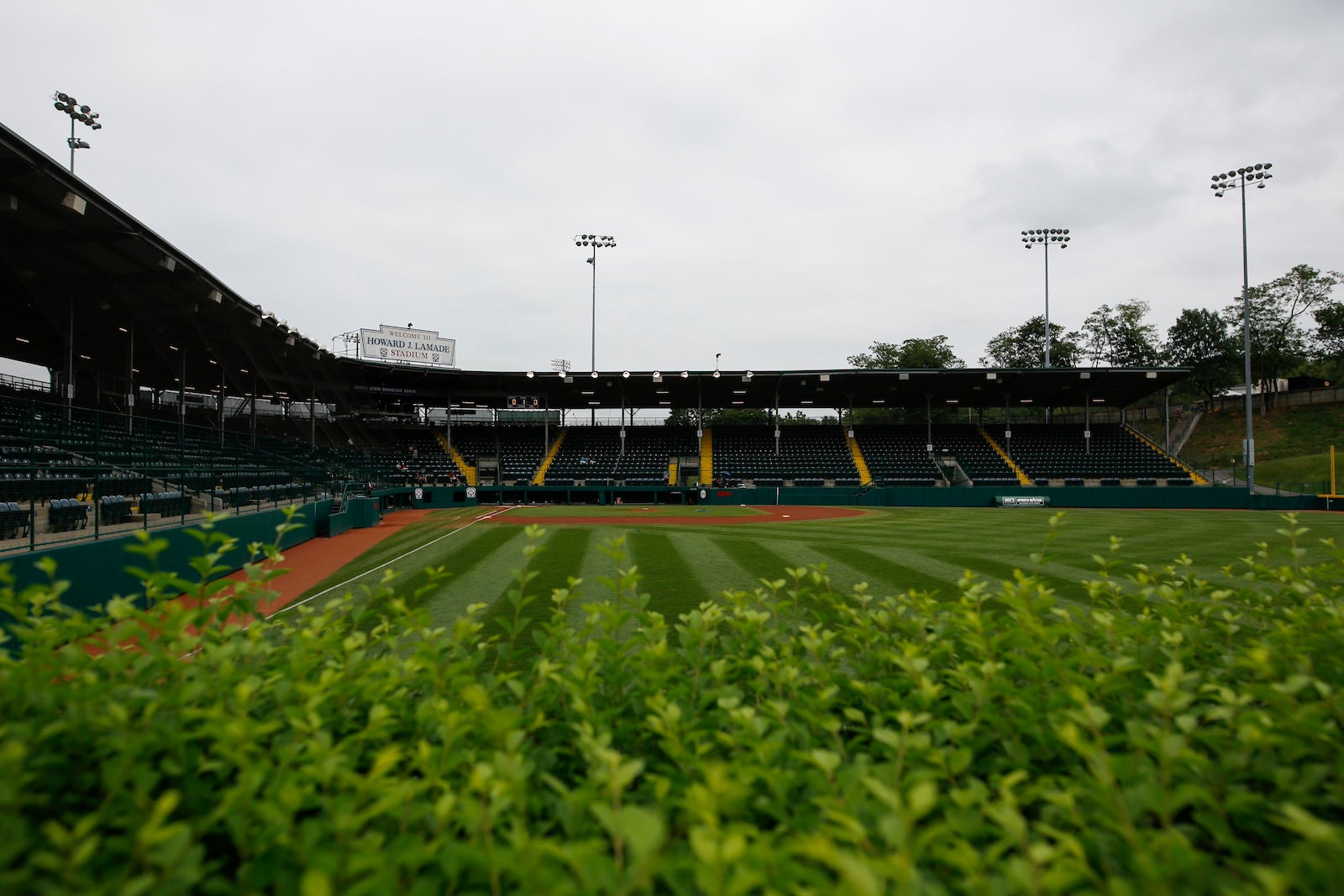
Williamsport, widely known as the host city for the Little League World Series each summer, is also the headquarters for numerous businesses.
The Little League World Series Complex in Williamsport, Pennsylvania. JOSHUA BESSEX/GETTY IMAGES
As time has passed, Howell has started to hear concerns from local leaders.
“Rumblings that we’re starting to have potential issues with recruitment to bring new businesses into the area,” he said.
It’s not just Williamsport.
That frustration is apparent in Dubuque, Iowa, too, where American Airlines offered 2,100 flights in 2019, per Cirium — an average of five daily departures.
But just weeks after the airport flooded with fans headed to another iconic baseball spectacle in 2022 — professional games at the “Field of Dreams” site near Dyersville, Iowa — Dubuque Regional Airport (DBQ) saw its only commercial service come to an end.
Dubuque, Iowa. JOHN ELK/THE IMAGE BANK/GETTY IMAGES
The airport has since welcomed upstart budget carrier Avelo Airlines, but it’s not the same. The airline flies twice weekly to Orlando, though it just paused its service until November as part of a seasonal cycle.
Clearly, there’s still a void, said Todd Dalsing, the airport’s director.
“We’re hoping we can eventually pick up — even if it’s not seven days a week — maybe it’s Monday to Friday, starting with one flight a day,” Dalsing said. “To get us back into the system, and be able to show the support of our community.”
US states with highest rate of air service lost
Rank
State
% of departures lost (January 2020 vs. January 2024)
1.
Vermont
– 33%
2.
New Hampshire
-29%
3.
Iowa
-28%
4.
Michigan
-28%
5.
Pennsylvania
-27%
6.
Maine
-26%
7.
Wisconsin
-24%
8.
Oregon
-24%
9.
North Dakota
-23%
10.
Ohio
-23%
Data sourced from the Regional Airline Association
Reasons for optimism? Maybe
There are at least some reasons to be optimistic.
Down the road from Williamsport, Wilkes-Barre Scranton International Airport (AVP), another hard-hit airport, has seen its seats in the first half of this year increase by 20% versus last year, per Cirium, thanks in large part to the arrival of another startup low-cost carrier, Breeze Airways — though seats from the airport will still be roughly a third short of 2019 levels.
In January, Williamsport itself secured flights to Dulles International Airport (IAD) near Washington, D.C., aboard commuter carrier Southern Airways Express. The twice-daily service begins next month. Still, it’s an imperfect replacement for the seamless connections American Airlines once offered via its Philadelphia hub.
HEATHER AINSWORTH/WASHINGTON POST/GETTY IMAGES
Avelo, in particular, has brought new life to other airports that didn’t have commercial service previously, such as in Wilmington, Delaware; New Haven, Connecticut; and Lakeland, Florida.
Regional service a stronger focus?
The larger airlines have also signaled interest in restoring service to smaller communities.
At an industry conference last fall, American Airlines CEO Robert Isom noted that the carrier’s growth plans in 2024 largely centered on getting regional aircraft back into the air.
“As I take a look out into 2024, there’s good news for a lot of regional communities that saw massive reductions in terms of capacity,” Isom said during a panel moderated by aviation journalist and current TPG contributor Edward Russell.
“It’s Roanoke [in Virginia] and Lubbock [in Texas] and a lot of small cities — [Michigan’s] Kalamazoo, Grand Rapids,” Isom said. “It’s going to be a lot of small cities throughout the United States.”
Delta Air Lines executives have likewise noted the carrier’s hope to bring regional jets back into the mix as part of a larger effort to rebuild capacity across parts of its network that haven’t fully recovered since the start of the pandemic.
“The final stage of our core hub restoration will be the full return of regional flying,” Delta President Glen Hauenstein said on the company’s most recent earnings call April 10. “We still have probably at least 50 regionals either not flying, or underutilized — probably almost 100 when you include the underutilization.”
A Delta Connection Embraer 175 operated by Republic Airways. NICOLAS ECONOMOU/NUR PHOTO/GETTY IMAGES
Yet, Black of the RAA believes any signs of progress are modest at best, with the number of pilots in the pipeline still not sufficient to fully overcome the service cuts of recent years — and a wave of pilot retirements expected later in the 2020s.
“We are not seeing communities fall off the map in vast numbers like we did in 2022 and 2023. But we aren’t seeing recovery at any scale,” Black said. “Air service remains in crisis.”
Small, local airports still popular
That’s not to say Americans have lost interest in small airports.
A majority of Dubuque citizens would support air service if it came back, Dalsing said, citing preliminary survey data from the local chamber of commerce.
After all, the same factors that made these airports convenient before the pandemic still exist today.
“Being 10 minutes from your home … short wait times, very short TSA line, friendly, accommodating staff … that definitely played a role,” Dalsing said.
Free parking doesn’t hurt, either, in Dubuque’s case.
More plainly, there’s obvious appeal in departing from an airport just down the street.
But across the country, it’s an option far fewer travelers have today than they did five years ago — and it’s not clear when that might change.
“It’s an economic impact to your community. It’s your connection to, not only the nation, but the world,” Dalsing said. “And, obviously, we don’t want rural America to be left behind.”
One country should not be able to censor the entire internet, the tech billionaire has argued
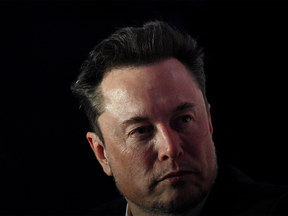
Tech billionaire Elon Musk has insisted he will not comply with an Australian order to remove a stabbing video from his X (formerly Twitter) platform. The entrepreneur has been told to withdraw the content, which features a non-fatal knife attack on an Assyrian bishop, for users worldwide.
The stabbing took place during a live-streamed sermon at a church in the suburbs of Sydney on April 15. Footage of the attack, which the Australian authorities deemed terrorism, quickly garnered views online and allegedly prompted heated protests near the crime scene.
The following day, Australia’s eSafety commissioner, Julie Inman Grant, ordered X and Meta to delete the footage entirely from their social platforms within 24 hours, including for users outside the country. “Every minute counts, and the more this content is up there, the more it is reshared, the more the velocity and the virality continues and we need to stem that,” she argued.
While Meta swiftly complied with the order, X said that it had only removed the video in Australia “pending a legal challenge.” Inman’s order for the clip to be brought down worldwide “was not within the scope of Australian law,” it argued. The company added that Canberra had threatened it with a daily fine of AUS$785,000 (US$510,000) over its reluctance to fulfill the demand.
On Monday, a federal court in Sydney ordered a temporary ban on the stabbing video for all X users, pending a hearing on a permanent ban on Wednesday. In its injunction against the platform, the eSafety Commission claimed that “geoblocking” of the footage by X was not enough due to the ability of the Australians to access it through VPN.
On Tuesday, Australian Prime Minister Anthony Albanese labeled Musk an “arrogant billionaire who thinks he’s above the law, but also above common decency.” Albanese claimed to ABC that the Tesla and SpaceX CEO was “out of touch” over his willingness to go to court in order to keep violent content online.
Musk responded to Albanese a few hours later, explaining that “our concern is that if any country is allowed to censor content for all countries, which is what the Australian ‘eSafety Commissar’ is demanding, then what is to stop any country from controlling the entire Internet?”
READ MORE: No Russian misinfo on X, but Western influence ops present – Musk
He also shared a post revealing that X has now become the most downloaded app in Australia. “The Australian people want the truth. X is the only one standing up for their rights,” Musk wrote.
The content in this section is supplied by GlobeNewswire for the purposes of distributing press releases on behalf of its clients. Postmedia has not reviewed the content.
You can save this article by registering for free here. Or sign-in if you have an account.
Article content
Resignations of Board Members Do Not Address Central Shareholder Demand to Return Glenn Chamandy as CEO
The Only Thing that Has Been Refreshed is the Names of the Directors – the Board’s Disdain for Shareholders Remains
Article content
Intends to Support Browning West Nominees at 2024 Annual Meeting
TORONTO, April 23, 2024 (GLOBE NEWSWIRE) — Turtle Creek Asset Management Inc. (“Turtle Creek”), a Canadian independent investment management firm with a 25-year history and a decade-long shareholder of Gildan Activewear Inc. (GIL: TSX and NYSE) (“Gildan” or the “Company”), today responded to the latest governance charade by the board of directors (the “Board”) of Gildan and released the following statement:
Advertisement 2
This advertisement has not loaded yet, but your article continues below.
THIS CONTENT IS RESERVED FOR SUBSCRIBERS ONLY
Subscribe now to read the latest news in your city and across Canada.
Exclusive articles from Barbara Shecter, Joe O’Connor, Gabriel Friedman, Victoria Wells and others.
Daily content from Financial Times, the world’s leading global business publication.
Unlimited online access to read articles from Financial Post, National Post and 15 news sites across Canada with one account.
National Post ePaper, an electronic replica of the print edition to view on any device, share and comment on.
Daily puzzles, including the New York Times Crossword.
SUBSCRIBE TO UNLOCK MORE ARTICLES
Subscribe now to read the latest news in your city and across Canada.
Exclusive articles from Barbara Shecter, Joe O’Connor, Gabriel Friedman, Victoria Wells and others.
Daily content from Financial Times, the world’s leading global business publication.
Unlimited online access to read articles from Financial Post, National Post and 15 news sites across Canada with one account.
National Post ePaper, an electronic replica of the print edition to view on any device, share and comment on.
Daily puzzles, including the New York Times Crossword.
REGISTER / SIGN IN TO UNLOCK MORE ARTICLES
Create an account or sign in to continue with your reading experience.
Access articles from across Canada with one account.
Share your thoughts and join the conversation in the comments.
Enjoy additional articles per month.
Get email updates from your favourite authors.
Sign In or Create an Account
or
Article content
From the outset of our private and public communications with the Board, we have been very clear in our singular desire for the Board to reverse its hasty, haphazard and value destructive termination of Glenn Chamandy. Our meeting with CEO Vince Tyra, his public statements to-date, and the Company’s most recent and bizarrely staged “Investor Update” reinforced our belief that the loss of Mr. Chamandy seriously impaired Gildan’s ability to drive value for shareholders.
The Board’s embarrassing retreat in the face of unprecedented shareholder opposition only proves that they care about one thing and one thing only – themselves. Rather than facing certain defeat at the upcoming 2024 annual and special meeting of Gildan shareholders (the “Annual Meeting”), the Board has stampeded for the exits, but not before hand-picking their replacements – a collection of individuals who have already declared that they will “stay the course”. We can’t fathom why the incoming board members would throw their full support behind Mr. Tyra when his leadership is opposed by so many shareholders, without first engaging with the owners of the Company. The statement by the incumbent Board that it decided that “near-term board refreshment was in the best interests of Gildan” is ludicrous. The only thing that has been refreshed are the directors’ names. The Board’s arrogance, intransigence, and disdain for Gildan’s shareholders remains.
Top Stories
Get the latest headlines, breaking news and columns.
By signing up you consent to receive the above newsletter from Postmedia Network Inc.
Thanks for signing up!
A welcome email is on its way. If you don’t see it, please check your junk folder.
The next issue of Top Stories will soon be in your inbox.
We encountered an issue signing you up. Please try again
Article content
Advertisement 3
This advertisement has not loaded yet, but your article continues below.
Article content
Over the past months, the Board has wasted significant company resources in a desperate attempt to avoid criticism for their terrible decision to replace Mr. Chamandy with Mr. Tyra and to frustrate the owners of the Company. The Board has engaged in a series of underhanded actions including character assassination, the advancement of an ever-changing narrative for its ill-conceived termination of Mr. Chamandy, legal maneuvers, a seemingly failed process to attract bids for the Company that the Board commenced at the worst possible time, and now a partial reconstitution of the Board. Each of these actions has imposed costs on Gildan’s shareholders, distracted the Company’s management team, and impaired shareholder value.
The Board cloaked their selection of hand-picked nominees in the language of “governance” and attacked the major shareholders of Gildan who opposed their actions. The Company’s incoming Chair reaffirmed the Board’s support for CEO Vince Tyra, declaring that “[t]he refreshed board and I fully believe in Vince”, which immediately exposed this pantomime of “change” being perpetrated upon shareholders.
Advertisement 4
This advertisement has not loaded yet, but your article continues below.
Article content
In a separate Bloomberg report, the incoming Chair both disparaged and dismissed the owners of the Company, calling them “the egos and the drama-seekers” and urging them to “get away”. It is the Board who should check their egos and end the drama. Reinstate Mr. Chamandy and fully endorse all eight of Browning West’s nominees. Let’s turn the page on this surreal chapter in Canadian governance history and get on with the business of growing Gildan’s shareholder value.
We intend to support each of Browning West’s nominees at the upcoming Annual Meeting.
No Solicitation
This press release does not constitute a solicitation of a proxy within the meaning of applicable laws, and accordingly, Gildan shareholders are not being asked to give, withhold or revoke a proxy.
Advisors
Davies Ward Phillips & Vineberg LLP is serving as Canadian legal counsel, Cleary Gottlieb Steen & Hamilton LLP is serving as United States legal counsel and Gagnier Communications is serving as communications advisor to Turtle Creek.
About Turtle Creek Asset Management Inc.
Turtle Creek is an independent investment management firm with a 25-year history. We manage over $5 billion for a clientele of high-net-worth families, institutions and wealth advisors. Turtle Creek is not your typical value investor. We are engaged shareholders focused on the long term. Turtle Creek is where the partners and our senior employees have all of their investable wealth. As a result, we are aligned with our fellow investors to an extent that few other firms can match.
Dark Web Compromised Credentials Monitoring – widens visibility into stolen credential intelligence uncovered from dark web sites that are designed to harvest and sell employee and customer logins as well as passwords stolen by infostealers and botnets. It also guards against future attacks by implementing countermeasures such as forced password resets and lockouts.
Threat Engagement and Disruption – covertly interacts with threat actors, on behalf of customers, to gain intelligence about the tactics, techniques, and procedures used. Enumerates threat actor infrastructure to disrupt Business Email Compromise (BEC) attacks and phishing sites.
Intelligence Feeds – enriches existing internal threat data and optimizes security controls with Fortra’s high-fidelity threat indicators sourced from proprietary collection technologies and curated by expert researchers, to better detect and mitigate credential theft, email, and money mule threats.
Intelligence Assessments – improves threat-based decision-making with supplemental, expanded insights from Fortra researchers on phishing incidents, email threats, and counterfeit threats.
With an expansive portfolio of cybersecurity technologies, Fortra has extensive visibility into the infrastructure and methods used by threat actors. Intelligence from these technologies is fed into the Fortra Threat Brain, where it is used to enrich its solutions and deliver intelligence services to customers.
“Much of the intelligence we source comes from attacks that haven’t been detected by common defenses. By luring attackers out and engaging them, we’re able to identify how they function and the infrastructure they depend on,” said John Wilson, Senior Fellow, Threat Research at Fortra. “Our intelligence helps enterprises improve their defenses strategically and operationally.”
Fortra is offering an in-depth review of the new threat intelligence services via webinar on Tuesday, April 30 at 11 a.m. Eastern, led by Cary Hudgins, Director of Product Management, and Michael Tyler, Senior Director, Security Operations at Fortra.
About Fortra Fortra is a cybersecurity company like no other. We’re creating a simpler, stronger future for our customers. Our trusted experts and portfolio of integrated, scalable solutions bring balance and control to organizations around the world. We’re the positive changemakers and your relentless ally to provide peace of mind through every step of your cybersecurity journey. Learn more about Fortra.
Recently, overcapacity seems to be attracting more attention in Western countries. And unsurprisingly, the main reason behind this so-called overcapacity is China. Unlike the last round of debate which involved iron and steel products, low-carbon or green products are now in the spotlight. Is that a reasonable worry and should we do something about it?
In the real world, the relationship between supply and demand decides the price. As compared to demand, the status of more supply or less can be described as overcapacity and undercapacity. If the market is small enough, when and whether production is suitable may not be difficult to decide. But when the interaction involves more stakeholders, e.g. in a global scenario, it becomes more complicated and dynamic. A lot of factors are affecting the process of approaching balance. As a result, the ideal balance of demand and supply will be much more difficult to reach.
Undercapacity is painful for both individual consumers and the whole society. Human society is indeed developing quickly. As purchasing ability increases, more products of higher quality are desired. Many countries have experienced insufficient supply. After the Industrial Revolution, steam engines improved productivity and vast areas where there was no water power like rivers needed more power support. But there were only several countries that had the technology to build steam engines and they were quite cautious about sharing that knowledge and ability with others.
When productivity is far from meeting demand, consumers do not have many choices, but accept the limited products at a much higher price. Some people may choose to buy more than they need to stock up, when possible, which will make undercapacity more serious. Thus, suppliers may not have the motivation to engage in research and development while getting high enough profits. The cycle of the product then stops to evolve. If a society has neither technology transfer nor product supply, the demand potential will be suppressed.
As time goes by, we enter a new era. Globalization has provided the world with so many opportunities. Countries are encouraged to enter the multilateral trade system of the World Trade Organization (WTO), to abide by the common understanding and rules to reduce barriers to international trade. Cooperation has reduced the limitation of development for so many countries and they can reach development goals by exchanging what they want with what they have. The nature of the increase in the volume of international trade is the market mechanism.
Demand can be met by supply from many possible suppliers. China is gaining its position in the international trade system as a leading country based on facts: Chinese companies can provide their partners with products of high quality and competitive prices. The importing countries can benefit from this either as consumers or by receiving intermediate products for further value-added processing.
Recently, three new products have attracted a lot of attention; electric vehicles, lithium batteries and solar panels are all related to the low carbon economy. These products are like the steam engines in the 18th century. But the differences are also obvious. China is open-minded and it shares with the world its knowledge and products to meet the demand.
Two weeks ago, I had an opportunity to talk with an expert from Malaysia in an online radio interview program. When asked about her opinion of the most serious challenge this year, she cited climate change; we are witnessing so many unusual weather phenomena. The United Arab Emirates received a whole year’s worth of rainfall in one day. Extreme weather affects agriculture and logistics and changes the living conditions in both urban and rural areas. Fortunately, most members made promises in the Paris Agreement and are willing to put energy transfer actions on their social and economic agendas.
But the ability to fulfil commitments is different. To reduce fossil fuels and use renewable energy, people’s awareness, technology, infrastructure, enterprises’ ability and policy environment are all necessary. It is easy to claim to be environment-friendly. But if the cost of using renewable energy is too expensive, if the equipment and tools of renewable energy easily misfunction, and if the use of renewable energy can cause inconveniences due to incompatibilities, people may feel uncomfortable and finally return to fossil fuels.
China provides solutions. After more than a decade of exploration, Chinese companies established a complete supply chain that provides not only the final green products, but also personalized solutions. When you are looking at the main players among the solar panel suppliers, there are almost no companies that were also in the market 10 years ago. Survival of the fittest is the gold principle of the market. Innovation is normally risky and requires more returns. Opportunities are only left for the bravest.
The Chinese government has reminded enterprises of the opportunities in the low-carbon era and created a comfortable development environment for these emerging sectors. Chinese companies for their part are attracted to going “green” thanks to potential profits. Without the participation of these companies, the low carbon transfer will be too expensive. Then it is easy to understand the reason for the boom in China’s exports of electric vehicles, lithium batteries and solar panels. Every country wants to solve the problem of slowing down climate change at an affordable cost and as quickly as possible. Without enough market demand, strong manufacturing bases and quick innovation ability, even the United States needs to depend on foreign supply to meet its domestic demand. The Biden administration postponed its additional tariffs on the import of solar panels from Southeast Asian countries in May 2023.
Indeed, the word “overcapacity” sounds familiar. About 10 years ago, there was already a debate on the overcapacity of iron and steel products. Quite a few Western countries believed that the main cause was China. They criticized China for producing too many steel products, which made the world suffer. When I met with a delegate from the U.S. Congress, we were asked to explain how China dealt with the overcapacity problem. Well, it is true that the Chinese government has carried out many practices to optimize the steel sectors. I tried to discuss that issue from a rational perspective. When there is more capacity than demand, there is overcapacity.
But we need to figure out the reason. The global financial crisis from 2007 to 2008 had a serious impact on the demand side and many economies including Europe suffered a lot. Meanwhile, China’s steel and iron production has been stable. Most of the capacity is absorbed in China’s domestic market, namely in real estate and infrastructure during the urbanization process. It’s not difficult to find that the overcapacity comes from the demand side and the United States should be responsible due to its subprime mortgage crisis. The delegate seemed to agree with my analysis.
As a responsible country, China did a lot to reduce overcapacity. While assuming the presidency of the G20 Hangzhou Summit, China and the G20 members agreed to set up the Global Steel Summit, which allows the stakeholders in the global supply chain for steel to discuss solutions and coordinate actions from different parts of the world.
Generally speaking, there are mainly three parts in a supply chain, the supply side, demand side and logistics. Ideally, a change in demand can be known by the suppliers for their production plan consideration. The suppliers will not produce much more than the market can really absorb.
But there may be several issues to address. First, demand is changing. Demand is decided by purchasing ability and also by the psychology of the consumers. Second, there are time lags between demand and supply. Production needs time for preparing raw materials and other inputs, and production arrangement. Third, logistics delays need to be considered, especially in international trade. Fourth, competition is always reshaping the supply-demand relationship. Competitors will join more profitable sectors. They are trying to increase the efficiency and provide consumers with different choices. Competition increases the dynamics of the market and also makes the supply-demand relationship more complicated. Last but not least, the government plays an important role in providing an open and fair market environment, including anti-competition administration.
Based on these discussions, it may be reasonable to say that the so-called “overcapacity” in China’s low-carbon products stems from either guesses that are not based on facts or just excuses supporting future actions. But none of these actions should be used to waste the already tight space on reacting to climate change, and hurt innovation and a developing economy’s effort to develop capacity-building.
Editor’s note: Zhou Mi is a senior research fellow at the Chinese Academy of International Trade and Economic Cooperation.
The views expressed in this article are those of the author and do not necessarily reflect those of Xinhua News Agency.
Strategic shift comes as carmaker prepares Tuesday to report its first revenue decline in four years
Author of the article:
Bloomberg News
Edward Ludlow and Dana Hull
Published Apr 22, 2024 • 7 minute read
You can save this article by registering for free here. Or sign-in if you have an account.
Elon Musk has signalled on his social media network that the recent moves at Tesla amount to activating wartime CEO mode.Photo by SERGEI GAPON/AFP via Getty Images
Article content
Elon Musk’s underlings at Tesla Inc. are accustomed to chaos. It comes with the territory of working for a chief executive who sets exacting targets and often abruptly switches directions — whose biographer describes his more intense moods as “demon mode.”
But even by Tesla standards, this year has been unruly. Its stock has slid more than 40 per cent amid slumping sales, confusing product decisions and more price cuts. Its once-dominant position in China’s EV market is under assault. A visit with India’s Prime Minister Narendra Modi for an anticipated investment announcement was called off at the last minute. All the while, the board has tried to revive a US$56 billion payout to Musk that a judge voided in January, on the grounds that directors had acted as “supine servants” to the CEO.
Advertisement 2
This advertisement has not loaded yet, but your article continues below.
THIS CONTENT IS RESERVED FOR SUBSCRIBERS ONLY
Subscribe now to read the latest news in your city and across Canada.
Exclusive articles from Barbara Shecter, Joe O’Connor, Gabriel Friedman, Victoria Wells and others.
Daily content from Financial Times, the world’s leading global business publication.
Unlimited online access to read articles from Financial Post, National Post and 15 news sites across Canada with one account.
National Post ePaper, an electronic replica of the print edition to view on any device, share and comment on.
Daily puzzles, including the New York Times Crossword.
SUBSCRIBE TO UNLOCK MORE ARTICLES
Subscribe now to read the latest news in your city and across Canada.
Exclusive articles from Barbara Shecter, Joe O’Connor, Gabriel Friedman, Victoria Wells and others.
Daily content from Financial Times, the world’s leading global business publication.
Unlimited online access to read articles from Financial Post, National Post and 15 news sites across Canada with one account.
National Post ePaper, an electronic replica of the print edition to view on any device, share and comment on.
Daily puzzles, including the New York Times Crossword.
REGISTER / SIGN IN TO UNLOCK MORE ARTICLES
Create an account or sign in to continue with your reading experience.
Access articles from across Canada with one account.
Share your thoughts and join the conversation in the comments.
Enjoy additional articles per month.
Get email updates from your favourite authors.
Sign In or Create an Account
or
Article content
Article content
On Tuesday, Tesla is expected to report a 40 per cent plunge in operating profit and its first revenue decline in four years. Musk has ordered up the company’s biggest layoffs ever and staked its future on a next-generation, self-driving vehicle concept called the robotaxi. People familiar with his directives, who asked not to be identified discussing internal deliberations, are unsettled by the changes the chief executive wants to push through.
The idea of creating an autonomous taxi service has been kicking around Tesla for at least eight years, but the company has yet to stand up much of the infrastructure it would need, nor has it secured regulatory approval to test such cars on public roads. For the moment, Musk has put off plans for a US$25,000, mass-market vehicle that many Tesla investors — and some insiders — are pushing for and believe is crucial to the carmaker’s future.
In the wake of media reports on the strategic shift, key managers including Drew Baglino, an 18-year company veteran who headed Tesla’s powertrain engineering and energy business, have left.
Advertisement 3
This advertisement has not loaded yet, but your article continues below.
Article content
Steered Tesla
Musk, 52, has steered Tesla out of many jams in the past. At US$469 billion, the company is still valued at more than nine times the market capitalization of General Motors Co. or Ford Motor Co. But after losing almost US$350 billion in market cap over four months, employees, investors and analysts alike are bewildered and second-guessing the company’s strategy.
“The stock will need to undergo a potentially painful transition in ownership base, with investors previously focused on Tesla’s EV volume and cost advantage potentially throwing in the towel,” Deutsche Bank AG analyst Emmanuel Rosner said last week, downgrading the shares from a buy and slashing his price target by more than a third.
The stock continued its slide Monday, trading down as much as 5.6 per cent shortly after the start of regular trading. The shares are on their longest losing streak since December 2022.
Musk has signalled on his social media network that the recent moves amount to activating wartime CEO mode. He liked a post saying as much after sending a company-wide email announcing that Tesla was cutting more than 10 per cent of global headcount, which would mean eliminating at least 14,000 jobs.
Advertisement 4
This advertisement has not loaded yet, but your article continues below.
Article content
The actual number of people ushered out may exceed 20,000, according to people familiar with the company’s planning. Musk’s reasoning, according to one person with direct knowledge of his edicts, was that Tesla should reduce headcount by 20 per cent because its vehicle deliveries dropped by that amount from the fourth quarter to the first quarter.
For those still among Tesla’s ranks after this culling, Musk has radically altered the marching orders. The company is “going balls to the wall for autonomy,” he declared last week. The robotaxi is now taking precedence over a cheaper car he first teased four years ago, both with respect to setting timelines for prototypes and arranging production capacity, one person familiar with the planning said.
Musk has talked a big game about autonomy for over a decade, and has convinced customers to pay thousands of dollars for a product Tesla has marketed as Full Self-Driving, or FSD. The name is a misnomer — FSD requires constant supervision and doesn’t render vehicles autonomous — but Musk has repeatedly predicted it’s on the verge of measuring up to the branding. “I’m the boy who cried FSD,” he said in July.
Advertisement 5
This advertisement has not loaded yet, but your article continues below.
Article content
Bullish on FSD
Musk and top engineers are particularly bullish about a major change in how FSD now works. A recently released version is the first to take a new approach to using raw camera footage to produce actions that drive the vehicle, Ashok Elluswamy, a director of Tesla’s Autopilot program, said on X last month. This should lead to “unprecedented progress,” he wrote.
But optimism around FSD and Musk’s belief that this new approach could bring about robotaxis is clouding the future of Tesla’s US$25,000 car project. People with knowledge of Tesla’s plans disputed the notion that the program has been cancelled altogether. All along, the company has been pursuing a low-cost vehicle architecture that will underpin several different types of models, one of which would have no steering wheel or pedals.
While these people confirmed the robotaxi is being prioritized, one described the next-generation vehicle project as an effort to wring cost reductions out of components and production methods, then apply those innovations to cheaper iterations of the Model Y and Model 3, the company’s two most popular EVs. Teams are placing particular emphasis on bringing these cost savings to bear with the Model Y.
Advertisement 6
This advertisement has not loaded yet, but your article continues below.
Article content
Tesla’s Cybertruck is an expensive pickup that’s difficult to build. Last week, the company recalled the almost 3,900 trucks it’s sold to fix faulty accelerator pedals.Photo by ROBYN BECK/AFP via Getty Images
It’s unclear just how much solace this might be to investors who’ve been spooked by reports that Tesla’s answer to affordable options like the Toyota Corolla has been scrapped entirely. Many are concerned that the only new model the company will offer to consumers in the half decade after the Model Y’s debut will be the Cybertruck, an expensive pickup that’s difficult to build. Last week, the company recalled the almost 3,900 trucks it’s sold to fix faulty accelerator pedals.
“Investors, particularly institutional ones, are losing patience,” said Bloomberg Intelligence analyst Steve Man. “The initial hype around Full Self-Driving and robotaxis has waned, and the pendulum has swung in the opposite direction.”
Reorienting Tesla around robotaxis is risky. While federal agencies have taken a permissive approach to regulating technology that has the potential to make roads safer, scrutiny at the state and local level has proven difficult to navigate.
Former Arizona governor Doug Ducey welcomed Uber Technologies Inc.’s self-driving vehicles to the state “with open arms and wide-open roads” in 2016, only to ban them after one fatal collision with a pedestrian in 2018. Uber sold off its autonomous-vehicle unit two years later.
Advertisement 7
This advertisement has not loaded yet, but your article continues below.
Article content
Robotaxi testing
More recently, GM’s Cruise has spent the last six months working its way back to robotaxi testing after one of its cars struck and dragged a pedestrian in San Francisco. California also is holding up an expansion by Alphabet Inc.’s Waymo after several incidents, including one of its vehicles hitting a cyclist.
Musk nevertheless is betting Tesla can make robotaxis a reality by making FSD available to more consumers and cutting prices. He’s pushing test drives and free 30-day trials to promote the feature, buoy revenue and ingest more camera footage.
Tesla is building data centres in Buffalo, N.Y., and Austin, where it’s headquartered, to process the footage captured by its vehicles and train its driving systems. The Buffalo site is further along, while the Austin one is struggling with cost overruns, people familiar with the projects said.
The rationale for Tesla’s layoffs was not to squeeze savings from parts of the company and redirect spending to robotaxis, according to a person with direct knowledge of how job cuts were drawn up. Teams across the organization — including those working on autonomy — were given equal targets for headcount reduction, this person said.
Advertisement 8
This advertisement has not loaded yet, but your article continues below.
Article content
Based on interviews with more than a dozen employees affected across the U.S., the firings were poorly organized and executed.
Emails that began “Dear Employee” were sent to personal addresses after midnight. At Tesla’s battery factory in Nevada, many staff started their Monday with gridlock at the front gate. They were diverted to a parking lot where security guards scanned badges to discern who still had jobs and who had been laid off. One person who learned they had been let go this way said it was the coldest and most humiliating experience of their career.
“A lot of people found out they were no longer employed in the middle of their shift, or after arriving for what was thought to be just another Monday,” Jordana Hernandez, a former service manager in Virginia, wrote on LinkedIn. “That’s the part that hurts. Giving literal blood sweat and tears to a company that showed zero humanity for the people that have sacrificed more than anyone outside of Tesla can imagine.”
This advertisement has not loaded yet, but your article continues below.
Article content
The Saturday night before the layoffs began, Musk was striking dramatic poses on the red carpet and joking about who should play him in an upcoming biopic.
Days later, Tesla chair Robyn Denholm criticized a Delaware court for throwing out the board’s pay package for Musk and urged shareholders to re-approve it. Around this time, the chief executive learned the company had skimped on what it was offering staff whose jobs were just eliminated.
“It has come to my attention today that some severance packages are incorrectly low,” Musk wrote in an email to Tesla’s remaining employees. “My apologies for this mistake. It is being corrected immediately.”
WINDHOEK, April 22 (Xinhua) — Namibia’s agricultural sector faces significant challenges, as outlined in the Crop Prospects, Food Security and Drought Situation Report, released on Monday by the Ministry of Agriculture, Water, and Land Reform.
According to the report, preliminary crop estimates indicate a drastic reduction in projected harvests in all communal crop-producing regions and the commercial sector.
The aggregated national cereal production, encompassing maize, millet, sorghum, and wheat, stands at a mere 72,150 metric tons (MT). “This figure represents a staggering 53 percent decrease compared to the previous season’s harvest of 153,012 MT,” the report noted, adding that the decline is particularly pronounced in the commercial area, where production is projected to reach only 35,200 MT, marking a substantial 68 percent drop from last season’s output of 111,000 MT.
Contributing factors include the devastating impact of drought in rain-fed areas and a notable decrease in farmers cultivating maize and wheat, the report said.
On the contrary, the report revealed that the irrigation green schemes alone improved the expected harvest for maize and wheat by 24 and 63 percent compared to last season, respectively. This improvement was attributed to a notable increase in the planted area by the irrigation green schemes.
Examining households, the report indicated that diminished agricultural output in the 2022/2023 season has depleted food stocks from previous harvests, forcing many households to depend on market purchases and drought-relief food assistance.
The severity of the situation is most pronounced in southern, eastern, western, and central Namibia, where persistent drought conditions have significantly impacted livestock farming.
Meanwhile, in response to the crisis, the report said the government has implemented drought relief measures through the Livestock Support Program in all 14 regions.
These measures include livestock marketing incentives, grazing land leases, transport assistance, and fodder subsidies to affected farmers.
ADDIS ABABA, April 22 (Xinhua) — Africa’s share of global poor people has increased significantly, with one reason being low scientific and technological progress across the continent, a senior official of the United Nations Economic Commission for Africa (UNECA) said.
At the opening of the Sixth African Science, Technology and Innovation (STI) Forum on Sunday in Addis Ababa, the capital of Ethiopia, Deputy Executive Secretary of UNECA Antonio Pedro said Africa’s share of global poor people increased from 15 percent in 1990 to 63 percent in 2018 and may reach 90 percent by 2030.
Pedro said Africa must invest in human capital development, learn how to produce, sell and use emerging technologies such as artificial intelligence and genomics that are transforming every aspect of life.
“Science and technology can advance the wellbeing of millions of households, farmers, fishermen, and many others that still use basic tools, and with the help of science and technology they can be lifted out of extreme poverty,” said Pedro.
He said globally, the number of people living in poverty declined from 1.9 billion to 689 million between 1990 and 2018, while that of Africa increased from 283 million to 433 million during the same time.
Pedro said science and technology can play an important role in increasing the efficiency of service delivery to the poor, monitoring living conditions and predicting imminent crises in crowded or remote areas.
Noting that about 1 billion people in Africa cannot afford a healthy diet, Pedro said Africa is unlikely to meet the Malabo Declaration on Accelerated Agricultural Growth and Transformation for Shared Prosperity and Improved Livelihoods, adopted by the African Union Assembly Heads of State and Government in June 2014 in Malabo, Equatorial Guinea, to end all forms of hunger by 2025.
He said science, technology and innovation are critical to transform the continent’s agriculture and industry and build a prosperous Africa.
UNESCO Assistant Director-General for Natural Science Lidia Arthur Brito said international collaboration in science is an ideal way to foster peace and sustainable development in Africa.
“By investing in science and promoting innovation, African societies can empower the youth to become not only drivers of economic growth but also drivers of solutions to pressing environmental challenges,” Brito said, adding that scientific research must be linked to societies and local communities to bring about the desired socio-economic development.
Held ahead of the African Regional Forum on Sustainable Development, the STI Forum is organized by the UNECA in collaboration with the African Union Commission and other partners, under the theme “Effective delivery of innovative science and technology solutions to reinforce the 2030 Agenda for Sustainable Development and Agenda 2063 and eradicate poverty in Africa.”
Published Apr 21, 2024 • Last updated 4 minutes ago • 3 minute read
You can save this article by registering for free here. Or sign-in if you have an account.
Article content
NEW YORK (AP) — “Civil War,” Alex Garland’s ominous American dystopia, remained the top film in theaters in its second week of release, according to studio estimates Sunday.
The A24 election-year gamble, the indie studio’s biggest budgeted film yet, took in $11.1 million in ticket sales at 3,929 theaters over the weekend. The $50 million film, set in a near-future U.S. in which Texas and California have joined in rebellion against a fascist president, has grossed $44.9 million in two weeks.
Advertisement 2
This advertisement has not loaded yet, but your article continues below.
THIS CONTENT IS RESERVED FOR SUBSCRIBERS ONLY
Subscribe now to read the latest news in your city and across Canada.
Exclusive articles from Barbara Shecter, Joe O’Connor, Gabriel Friedman, Victoria Wells and others.
Daily content from Financial Times, the world’s leading global business publication.
Unlimited online access to read articles from Financial Post, National Post and 15 news sites across Canada with one account.
National Post ePaper, an electronic replica of the print edition to view on any device, share and comment on.
Daily puzzles, including the New York Times Crossword.
SUBSCRIBE TO UNLOCK MORE ARTICLES
Subscribe now to read the latest news in your city and across Canada.
Exclusive articles from Barbara Shecter, Joe O’Connor, Gabriel Friedman, Victoria Wells and others.
Daily content from Financial Times, the world’s leading global business publication.
Unlimited online access to read articles from Financial Post, National Post and 15 news sites across Canada with one account.
National Post ePaper, an electronic replica of the print edition to view on any device, share and comment on.
Daily puzzles, including the New York Times Crossword.
REGISTER / SIGN IN TO UNLOCK MORE ARTICLES
Create an account or sign in to continue with your reading experience.
Access articles from across Canada with one account.
Share your thoughts and join the conversation in the comments.
Enjoy additional articles per month.
Get email updates from your favourite authors.
Sign In or Create an Account
or
Article content
Article content
Its provocative premise — and A24’s marketing, which included images of U.S. cities ravaged by war — helped keep “Civil War” top of mind for moviegoers.
But it was a painfully slow weekend in theaters — the kind sure to add to concern over what’s thus far been a down year for Hollywood at the box office. Year-to-date ticket sales are down almost 20% compared to last year, according to Comscore.
Going into the weekend, Universal Pictures’ “Abigail,” a critically acclaimed R-rated horror film about the daughter of Dracula, had been expected to lead ticket sales. It came in second with $10.2 million in 3,384 theaters.
That was still a fair result for a film that cost a modest $28 million to make. “Abigail,” which remakes the 1936 monster film “Dracula’s Daughter,” is about a 12-year-old girl taken by kidnappers who soon realize they’ve made a poor choice of hostage. It’s directed by the duo Matt Bettinelli-Olpin and Tyler Gillett whose production company goes by the name Radio Silence.
More concerning was the overall tepid response for a handful of new wide releases — and the likelihood that there will be more similar weekends throughout 2024. Last year’s actors and writers’ strikes, which had a prolonged effect on the movie pipeline, exacerbated holes in Hollywood’s release schedule.
Top Stories
Get the latest headlines, breaking news and columns.
By signing up you consent to receive the above newsletter from Postmedia Network Inc.
Thanks for signing up!
A welcome email is on its way. If you don’t see it, please check your junk folder.
The next issue of Top Stories will soon be in your inbox.
We encountered an issue signing you up. Please try again
Article content
Advertisement 3
This advertisement has not loaded yet, but your article continues below.
Article content
Horror films, in recent years among the most reliable cash cows in theaters, also haven’t thus far been doing the automatic business they previous did. According to David A. Gross, who runs the consulting firm Franchise Entertainment Research, horror releases accounted for $2 billion in worldwide sales in 2023.
Guy Ritchie’s “The Ministry of Ungentlemanly Warfare” debuted with $9 million in 2,845 theaters. In the based-on-a-true-story Lionsgate release, which reportedly cost $60 million to produce, Henry Cavill leads a World War II mission off the coast of West Africa.
Though Ritchie has been behind numerous box-office hits, including the live-action “Aladdin” and a pair of Sherlock Holmes films, his recent movies have struggled to find big audiences. The Lionsgate spy comedy “Operation Fortune: Ruse de Guerre” grossed $48 million against a $50 million budget, while MGM’s “The Covenant,” also released last year, made $21 million while costing $55 million to make.
A bright sign for “The Ministry of Ungentlemanly Warfare”: audiences liked it. The film earned an A-minus CinemaScore.
Advertisement 4
This advertisement has not loaded yet, but your article continues below.
Article content
The anime “Spy x Family Code: White,” from Sony’s Crunchyroll, also struggled to stand out with audiences. Though the adaptation of the Tatsuya Endo manga TV series “Spy x Family” has already been a hit with international moviegoers, it debuted below expectations with $4.9 million in 2,009 U.S. theaters.
The mightiest film globally, though, continues to be “Godzilla x Kong: The New Empire.” The Warner Bros. monster movie has for the past month led worldwide ticket sales. It added another $9.5 million domestically and $21.6 million internationally to bring its four-week global total to $485.2 million.
Estimated ticket sales for Friday through Sunday at U.S. and Canadian theaters, according to Comscore. Final domestic figures will be released Monday.
1. “Civil War,” $11.1 million.
2. “Abigail,” $10.2 million.
3. “Godzilla x Kong: The New Empire,” $9.5 million.
4. “The Ministry of Ungentlemanly Warfare,” $9 million.