Author: Press Headliner

  • 2024 NFL Draft: Top 50 Big Board

    2024 NFL Draft: Top 50 Big Board


    (Photo credit: Junfu Han / USA TODAY NETWORK)

    Quarterbacks could be drafted 1-2-3-4 for the first time in history.

    But the 2024 NFL Draft is rich at multiple positions with depth for days at wide receiver and offensive tackle.

    Teams that covet a lockdown cornerback or stud safety might be out of luck, and the popular discussion around value at the interior offensive line and running back spots will play out in a big way starting in the second round.

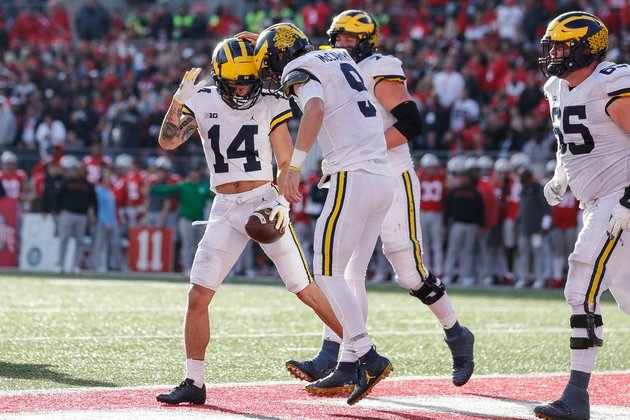
    If it’s Michigan men you want, this is your year. Starting with quarterback J.J. McCarthy, 10 former Wolverines graded out as top-125 prospects.

    Field Level Media assembled a final Big Board, ranking the top 50 prospects regardless of position and without consideration to their potential draft-day destination or any specific system operated by their future employers.

    1. QB Caleb Williams, Southern California

    Talent is enough to roll the dice that Williams consistently delivers the goods in the NFL if a franchise leaves space for him to be an individual without dropping traditional expectations for a QB1 and No. 1 pick.

    2. QB Jayden Daniels, LSU

    Daniels played like a much different man last season, entering the year with a fourth-round grade and ending it with a Heisman Trophy and squarely in the conversation for the No. 1 overall pick. He has elite speed, an elusive running style and exhibited incredible growth as a passer. No QB in the class performed better against pressure looks and blitzes. He has high-end accuracy and decision-making to overcome growing pains if he lands with a team with modest talent.

    3. QB Drake Maye, North Carolina

    Maye checks all necessary boxes to be a long-term starter. He has impressive touch and control as a passer regardless of the situation and enough quickness and presence to handle pressure and create throwing lanes under duress. His ceiling isn’t as high as some of the other quarterbacks on this list but has better mobility than expected and enough arm talent.

    4. WR Marvin Harrison Jr., Ohio State

    Granted he was all but guaranteed attention based on his Hall of Fame dad, but Harrison himself is on the path to being GOATed and building his own legacy. He has looked like a future star since he stepped on the field at Ohio State and stood above the last three first-round receivers to come out of Columbus thanks to his route-running prowess, body control and ability to win at every level of the field. It’d be a surprise if he isn’t a decade-long starter.

    5. WR Malik Nabers, LSU

    Such a smooth athlete he will be knocked for looking like he’s rolling on cruise control, the truth is Nabers is a graceful open-field mover with instant change-of-direction agility and the build-up speed to pull away from defenders. He may need time to adjust to the physicality of NFL press coverage, but his traits suggest he gets there.

    6. WR Rome Odunze, Washington

    Odunze slots closely to Nabers and Harrison depending on what you’re looking for at the position. He’s incredibly strong playing through contact along his routes, tracks the ball naturally and doesn’t lose when fighting for the ball in a crowd. He’s not the craftsman or overall athlete Nabers and Harrison are at this stage, but some evaluators wrote the same knocks on Larry Fitzgerald’s Pitt scouting report.

    7. OT Joe Alt, Notre Dame

    Big, long and steady in pass protection, Alt is an adequate athlete but his game really shines when shutting down power rushers or using his length to seal off pressure off the corner. He’s not a nasty blocker who will push people around and elite athletes will test his game, but he has the skill set to lock up almost anyone in the league.

    8. TE Brock Bowers, Georgia

    A unique height-weight-speed matchup who has the ball skills and speed to threaten any linebacker or safety, Bowers is more of a supersized receiver than a tight end. He won’t be a factor in the run game early in his career, but his ability to make plays after the catch and create separation against man coverage imply he can be a Pro Bowl impact player very soon.

    9. EDGE Dallas Turner, Alabama

    Teammate Will Anderson Jr. (No. 3 pick in 2023 to the Houston Texans) was more refined, but Turner was just as productive in his final year with the Crimson Tide, relying on his ability to consistently attack the corner and get around it. He’ll be a work in progress for his first season and perhaps more, but there’s an All-Pro ceiling to unveil should he maximize his full potential.

    10. OT Olumuyiwa Fashanu, Penn State

    Fashanu presents an overall body of work that separates him from a pack of offensive tackles in the first round. He’s not an elite athlete. But he plays with discipline and accurate hands, refined footwork and his well-rounded style of play blocks all paths to success for defensive linemen.

    11. CB Quinyon Mitchell, Toledo

    As one scout put it, no player in this class has a bigger appetite to be great. The self-titled “best player to come out of the MAC,” we need to see a bit more before taking his measurements against Randy Moss and Ben Roethlisberger. But Mitchell is the best Group of 5 player in this class by a considerable margin. He aced every pre-draft test to back up insane production on the ball and proved elite speed at the Scouting Combine. He’s a long, fluid corner with great speed and gets an A for competitive endurance.

    12. OT Taliese Fuaga, Oregon State

    A two-year starter at right tackle, Fuaga is a near carbon copy of Bears 2023 first-round pick Darnell Wright. He has adequate length and a steady approach to his pass sets that will allow him to stay outside as a pro. What teams covet in his game: beastly power in the run game and a reputation as a no-mercy finisher.

    13. EDGE Jared Verse, Florida State

    Verse looked spindly in 2022 while playing at 248 pounds, then added good weight in 2023 while maintaining his patented first step and subtle speed to power transition. His ability to set up blockers with his quickness and hand usage is hard to handle even for the most technical and athletic tackles. The extra year of development has paid off and should allow him to start as a rookie.

    14. CB Terrion Arnold, Alabama

    An easy moving corner with the size, speed and agility to match up against receivers with varied traits, Arnold deals with some lapses in judgment when playing the ball in the air or working from zone. His tools are there, and it might not be long before he is one of the best corners in the league by ironing out those flaws. He’s the top athlete – and one of the youngest — at the position in 2024, which will boost his final draft grade for most teams.

    15. OT Troy Fautanu, Washington

    Superb athlete with defensive line and offensive line chops, he could play any position on the line and moves like a tight end.

    16. OT J.C. Latham, Alabama

    Latham went from 325 pounds to 360 for his final season. The results were mixed on the field and he checked in at 343 at his March Pro Day. He is extraordinarily athletic for a man of his size. He wasn’t quite as fluid or nimble in pass protection or space in 2023, so he may need to drop weight as a pro to get back to looking like a future high-end starter.

    17. DT Byron Murphy II, Texas

    Overshadowed when the 2023 season began by high-profile teammates Alfred Collins and T’Vondre Sweat, Murphy’s incredible first step and lightning fast hands turn him into the best pro of the group. The boxy-framed defender lacks the length desired for the position but has great feel for attacking and creating ways to get off blocks.

    18. WR Brian Thomas Jr., LSU

    A height-weight-speed prospect whose emergence coincides with the rise of Heisman-winning quarterback Jayden Daniels. Not as developed as the receivers higher on this list, Thomas has immense potential while his game evolves. He has solid ball skills, can win reliably down the field when targeted against man coverage and could be in the unguardable category with route refinement.

    19. EDGE Laiatu Latu, UCLA

    Latu is a crisp athlete with the hands to always have the answers to the blocking test. He can rush the passer just easily standing up or with his hand down, and his feel for finding angles and capitalizing on the mistakes of blockers. His medical will be a major question mark for teams, but a clean bill of health should land him in the top 20.

    20. QB J.J. McCarthy, Michigan

    All-in character helped lift McCarthy into the early first-round conversation but he’s a clear No. 4 on the QB board as the least rehearsed in terms of direct NFL skillsets. But the tools clearly are all here, including the arm talent not flexed as frequently in Michigan’s pro-style, power-based, run-first offense.

    21. OL Graham Barton, Duke

    Draft him and plug him in at any of the three interior OL spots or trial Barton at left tackle in a quick-set passing attack and he’s ready to anchor the line for a decade.

    22. CB Nate Wiggins, Clemson

    Size (6-foot-2), speed (4.28 40 time) and traits for days. Wiggins would be one of the first players picked in a best-athlete-available draft. NFL teams aren’t all convinced he’ll bite if he can get the job done by showing his teeth, especially supporting against the run.

    23. CB Cooper DeJean, Iowa

    There are more sudden cover cornerbacks in the class but playmaking is DeJean’s game, and his straight-line speed should equate to top-level range if he’s moved to safety.

    24. OT Amarius Mims, Georgia

    Sample size is the only time “tiny” could be applied to the 6-8, 345-pound Mims. Raw with only eight career starts, Mims is a mountainous right tackle with the upside to make it at left tackle. But he’ll require patience and technique work to cover still-developing football instincts to maximize his natural ability and reach his significant ceiling.

    25. EDGE Chop Robinson, Penn State

    Much like recent late first-round pick Nolan Smith (Eagles), Robinson’s size isn’t ideal for setting the edge or holding up in the run game. There’s no dismissing his burst and bend to threaten almost any offensive tackle around the corner. He’s unseasoned but the bet from NFL teams will be he can be a 10-sack contributor during his first contract.

    26. DT Jer’Zhan Newton, Illinois

    A maxed-out frame and limited length worries some teams with Newton when it comes to defending the run. On the flip side, he’s a pro-ready pass rusher with great agility, hand speed and a knack for creating with counter moves.

    27. DT/DE Darius Robinson, Missouri

    Experience and winning tape across the defensive line, Robinson sheds blockers without a fight. Because of his measurables and raw tools, teams are enticed by his ceiling and versatility to fit virtually any defense.

    28. CB Kool-Aid McKinstry, Alabama

    The preliminary favorite to be the top cornerback in this class, McKinstry was overshadowed at times by teammate Terrion Arnold this year but still figures to be a longtime starter with return game skills to boot. While he is better in man than zone he has ball skills and athleticism that transfer easily to the NFL.

    29. C Jackson Powers-Johnson, Oregon

    Brick wall of a center at 328 pounds, Powers-Johnson could find his way to guard and wins on brute strength to hold off even the biggest nose tackles in the NFL.

    30. OT Tyler Guyton, Oklahoma

    Tools galore, Guyton needs polish but brings ideal size, length and quickness to be a franchise left tackle. His hand usage and footwork are essential pieces to develop, making him a long-term project. With the right coaching he could end up being one of the best linemen in the class.

    31. WR Adonai Mitchell, Texas

    Buzz continues to grow around Mitchell on a boost from his elite athleticism and testing at 6-2, 205. He ran a 4.34 40-yard dash and showed off his 39.5-inch vertical in Indianapolis, sending teams back to study his 18 touchdowns in three seasons split between Georgia (2021, 2022) and Texas.

    32. WR Ladd McConkey, Georgia

    Speaking of scorers, McConkey had 19 career touchdowns with the Bulldogs and his skill set and body type bear some resemblance to Cooper Kupp, the kind of relative comparisons pushing his draft stock into the first round since an injury-plagued junior season ended.

    Best of the rest:

    33. WR Xavier Worthy, Texas

    34. OG Jordan Morgan, Arizona

    35. QB Bo Nix, Oregon

    36. OT Kingsley Suamataia, BYU

    37. LB Edgerrin Cooper, Texas AM

    38. WR Troy Franklin, Oregon

    39. DT Kris Jenkins, Michigan

    40. WR Roman Wilson, Michigan

    41. C Zach Frazier, West Virginia

    42. LB Junior Colson, Michigan

    43. CB Mike Sainristil, Michigan

    44. EDGE Marshawn Kneeland, Western Michigan

    45. WR Ricky Pearsall, Florida

    46. WR Malachi Corley, Western Kentucky

    47. CB Max Melton, Rutgers

    48. DT Maason Smith, LSU

    49. S Tyler Nubin, Minnesota

    50. EDGE Chris Braswell, Alabama

    –Field Level Media

  • ‘Iran is in for the long haul’ with oil tanker hijacks, expert says

    ‘Iran is in for the long haul’ with oil tanker hijacks, expert says


    Iranian soldiers take part in an annual military drill in the coast of the Gulf of Oman and near the strategic Strait of Hormuz.

    Anadolu | Anadolu | Getty Images

    The containership MSC Aries seized by Iran over the weekend marked at least the sixth vessel hijacked by Iran and its proxies in response to the Israel-Gaza war, and it’s adding to the challenges to longstanding freedom of navigation principles that maritime shipping relies on.

    Before this weekend’s tanker seizure, the last vessel Iran hijacked was the St. Nikolas on January 1. According to U.S. Naval Forces Central Command, that brought the total number of vessels being held to five, and over 90 crew members hostage. Previous to that, the Iranian-backed Houthis hijacked The Galaxy Leader on November 19.

    The latest development has shipping and energy experts bracing for a long-term timeline of uncertainty.

    “Iran is in this for the long haul,” said Samir Madani, co-founder of Tankertrackers.com, an independent online service that tracks and reports crude oil shipments in several geographical and geopolitical points of interest.

    The MSC Aries was identified by Iran as having a link to Israel. The containership has a carrying capacity of 15,000-TEUs (twenty-foot equivalent containers). MSC leases the Aries from Gortal Shipping, an affiliate of Zodiac Maritime, which is partly owned by Israeli businessman Eyal Ofer.

    MSC declined to comment directly to CNBC.

    In a statement released by MSC on Wednesday, it said the crew members were safe and discussions with Iranian authorities were underway to secure their earliest release and to have the cargo discharged.

    Madani said he does not expect a quick release. “They will hold the MSC Aries for a long period. Iran has been holding some tankers for about a year, if not longer now,” he said.

    According to Tankertracker information, Madani said the vessel is being held in the Khuran Straits, not too far from three other tankers Iran hijacked: the Advantage Sweet, Niovi, and St. Nikolas.

    A Planet Labs satellite image of the location of the MSC Aries and other tankers recently hijacked by Iran.

    Planet Labs PBC

    As the U.S. considers more sanctions against Iran in response to its recent attack on Israel, Iran has been using the hijacked ships as a means of sanctions retaliation.

    “Iran has already seized the Kuwaiti oil that was onboard the Advantage Sweet and has been loaded onto their VLCC supertanker the Navarz. Iran chose to do this as a way to compensate for sanctions,” Madani said.

    While the Niovi was empty at the time of the seizure, the St. Nikolas is filled with a million barrels of Iraqi oil.

    Treasury Secretary Janet Yellen said on Tuesday that the government may do more to prevent Iran’s ability to export oil despite U.S. sanctions. China’s purchases of Iranian oil in recent years have allowed Iran to keep a positive trade balance.

    According to the U.S. Energy Information Agency, China, the world’s largest importer of crude oil, imported 11.3 million barrels per day of crude oil in 2023, 10% more than in 2022. Iran ranked second in oil exports to China behind Russia. Customs data indicates that China imported 54% more crude oil (1.1 million b/d) from Malaysia in 2023 than in 2022, with industry analysts speculating that much of the oil shipped from Iran to China was relabeled as originating from countries such as Malaysia, the United Arab Emirates, and Oman to avoid U.S. sanctions.

    The markets continues to assess the risk of further escalation in the military tensions between Israel and Iran, which could lead to a disruption in the Strait of Hormuz, through which about 30% of the world’s seaborne oil passes, according to JPMorgan. On Tuesday, oil edged higher amid talk of sanctions.

    An Iranian blockade would supercharge oil prices, but the risk is low given that the strait has never been closed off despite many threats by Tehran to do so over the past four decades, according to JPMorgan.

    “They can’t close the Strait of Hormuz, but they can do significant damage to energy infrastructure, to vessels in the region,” RBC’s head of global commodity strategy and Middle East and North Africa research, Helima Croft, told CNBC on Monday, referring to Iran’s capabilities.

    “While I can’t imagine Iran would want to fill up their anchorage with vessels, they want to keep the waters in a constant state of chaos,” Madani said. But with a closure, he said, “They would shoot themselves in the foot since their biggest client is China.”

    Andy Lipow, president of Lipow Oil Associates, says the closure of the Strait of Hormuz would result in a spike of Brent crude oil prices to the $120 to $130 range. “This would strain ties with China and India who purchase a significant amount of Persian Gulf oil to meet much of their energy demand.”

    Lipow also said Iran might be reluctant to shut the waterway for fear of antagonizing Saudi Arabia, Kuwait and Iraq, who depend on the strait being open for most of their oil exports. The bigger immediate fear in the oil market, he said, is that the attack by Iran on Israeli territory leading to a counterattack by Israel on Iran damaging oil-producing and exporting facilities.

    Kevin Book, managing director of ClearView Energy Partners, says the markets need to keep an eye on sanctions from both the US and UN potentially.

    In a note to clients, ClearView highlighted that the House of Representatives added several Iran sanctions bills to its calendar for consideration this week, under suspension rules, including new sanctions on Iranian oil exports to China. Book said the House was considering 11 bills in all in response to Iran’s attack on Israel.

    “We think most if not all bills could garner (notionally) veto-proof bipartisan support,” the note said. “Passage requires a two-thirds majority of all members present and voting.”

    Israel has also asked the U.N. to reinstate multilateral sanctions lifted by the Iran nuclear deal, but for this to happen, France, Germany and the U.K., parties to the nuclear deal, would have to agree. “There are many risks unfolding. The forest is on fire,” Book said.

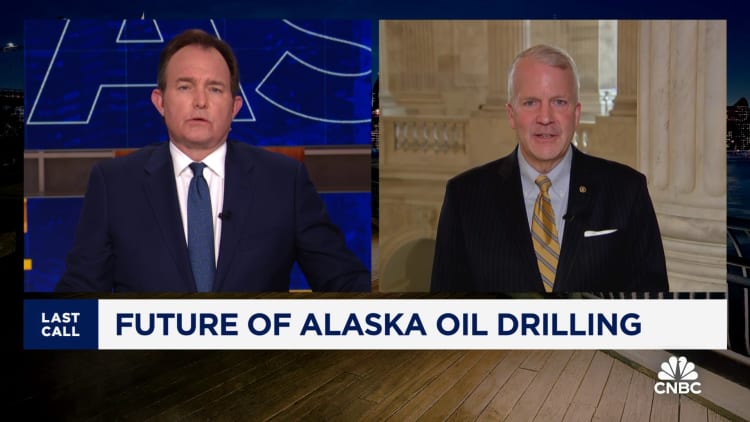
    Sen. Dean Sullivan talks impact of Iran's strikes on Israel and what it means for crude oil prices
  • British Columbia’s Rental Protection Fund Calls for Urgency Following the Unveiling of Canada’s 2024 Federal Budget

    British Columbia’s Rental Protection Fund Calls for Urgency Following the Unveiling of Canada’s 2024 Federal Budget


    Article content

    Following the Federal Government 2024 budget release, British Columbia’s Rental Protection Fund is asking for expedited implementation of the Canada Rental Protection Fund to begin protecting renters at risk today.

    VANCOUVER, British Columbia, April 17, 2024 (GLOBE NEWSWIRE) — Finance Minister Chrystia Freeland unveiled Canada’s 2024 Federal Budget this week, which included details on the allocation of funds for the $1.5 billion Canada Rental Protection Fund. The Canada Rental Protection Fund, aimed at protecting the remaining affordable housing stock in Canada, was introduced last week as part of the Government’s new Housing Plan. It is modeled after BC’s Rental Protection Fund and its compelling proof of concept in addressing the housing crisis by intervening in the protection of affordable housing to keep life affordable where it is still within reach.

    Advertisement 2

    Article content

    Article content

    “This starts with better protecting renters from steep rent increases and renovictions,” Freeland stated in the Budget speech. The Canada Rental Protection Fund is one of these key measures and will provide $1 billion in loans and $470 million in contributions to support affordable housing providers to acquire units and preserve rents at a stable level for decades to come. The Fund will be co-led and co-funded by the federal government and other partners, and it is intended to help mobilize investments and financing from the charitable sector, private sector, and other orders of government.

    While the federal government’s focus on a nationwide Rental Protection Fund program demonstrates Ottawa’s understanding of the urgency of protecting existing rental homes, the need for a roadmap of the Canada Rental Protection Fund is apparent, and the funding falls short of what is needed to protect renters at risk now. The budget revealed that only $5 million in grant allocations will be made available this year, with no details on the $1 billion in low-cost loans. This model has great potential to mobilize investment from the charitable sector, private sector and other levels of government, but even if that initial grant allocation were to be matched dollar for dollar by both private capital and provincial contributions, only 200 homes could be protected across the country.

    Article content

    Advertisement 3

    Article content

    “The initial grant allocation will not move the needle in preserving rental property. The federal government has just introduced the most ambitious housing investment in over 50 years, but that investment will not make the impact it needs to if we are losing 10.5 instead of 11 homes for every new home we build,” said Katie Maslechko, CEO of the Rental Protection Fund. “If the Canada Rental Protection Fund is intended to be co-led and co-funded, the budget appears to illustrate a strong desire for it to be co-designed as well. The Rental Protection Fund has laid the foundation for the model to protect and preserve rental, and we look forward to further collaborating with the federal government to demonstrate how this work can be done efficiently and effectively – and that our community housing and private capital partners are ready to do the same.”

    In under eight months, nearly 900 homes across 18 different buildings have received funding approval from British Columbia’s Rental Protection Fund. Looking ahead, British Columbia’s Rental Protection Fund is poised with 2,000 homes ready for acquisition by pre-qualified community housing providers and more than $200 million in impact investment and philanthropic capital ready to invest in it. The Rental Protection Fund is ready to leverage the Province of BC’s $500 million investment alongside this private capital. Building community assets not only fosters community wealth – and these acquisitions alone would propel the community housing sector by over $500 million.

    Advertisement 4

    Article content

    The details in Canada’s 2024 federal budget mark a crucial step in tackling the housing affordability crisis, but greater urgency and greater allocation of funds are needed to make an impact at a national scale. Renters are at risk today, private capital is ready to play a role, and an expedited launch of the Canada Rental Protection Fund will allow the community housing sector to acquire rental buildings, protecting renters and preserving affordability.

    For more information or media inquiries, please contact media@rentalprotectionfund.ca.

    Media Contact
    Jennifer Kim
    Talk Shop Media
    778-898-4395
    jennifer@talkshopmedia.com

    About The Rental Protection Fund:

    Endorsed by the provincial government with a groundbreaking $500 million investment, the Rental Protection Fund is B.C.’s direct response to the housing crisis. Spearheaded by CEO Katie Maslechko, the Fund’s core mission is to safeguard tenants and ensure attainable rental homes are available for future generations. It empowers non-profit housing organizations and co-operatives with capital contributions, facilitating the acquisition of existing rental buildings. This initiative aims to sustain housing attainability and stability for B.C.’s renters over time.


    Article content

  • AU urges African countries to build cyberspace capabilities

    AU urges African countries to build cyberspace capabilities


    ADDIS ABABA, April 17 (Xinhua) — The African Union (AU) has called on African countries to build capabilities in cyberspace as countries face increasing cyber threats.

    The call was made during a cyber diplomacy-themed workshop that brought together representatives of diplomatic missions of the AU member states at the AU headquarters in the Ethiopian capital of Addis Ababa on April 15-16, the AU said in a press statement issued Wednesday.

    Calixte Aristide Mbari, head of the Division of Democracy, Elections and Constitutionalism at the AU Commission, said African countries need to exert concerted efforts to tackle the challenges faced in cyberspace.

    “We are witnessing cyberspace increasingly becoming a new ground for geopolitical competition and sometimes attacks against national security,” an AU statement quoted Mbari as saying.

    According to the AU, the main objectives of the workshop were to initiate an entry point for cyber diplomacy efforts at the AU, raise awareness of existing cyber threats and key cybersecurity priorities, and initiate discussions among the diplomatic community on the nature and extent of the threat.

    Noting that African countries are increasingly facing cyber threats and challenges, the 55-member continental organization said Africa has developed the AU Convention on Cyber Security and Personal Data Protection, which was adopted by African leaders back in 2014.

  • Wells Fargo reports 7% decline in Q1 profit, surpasses forecasts

    Wells Fargo reports 7% decline in Q1 profit, surpasses forecasts


    SAN FRANCISCO, California: Wells Fargo reported a seven percent decline in first-quarter profit, surpassing analysts’ forecasts despite increased costs associated with customer deposits and a drop in borrower demand.

    The bank’s stock experienced a 2.1 percent decline, reflecting investor concerns over the uncertain outlook for interest payments in the near future.

    The bank anticipates a seven percent to nine percent decrease in net interest income (NII) for the year, citing volatility in market conditions and uncertainties surrounding customer behavior.

    “It is certainly challenging these days to forecast NII, given all of the volatility that we have seen across a lot of the different data points, as well as some of the uncertainty that is out there relative to how our clients are going to behave,” finance chief Michael Santomassimo told reporters on a call.

    However, some analysts view the bank’s guidance as conservative and believe that Wells Fargo could generate higher income if interest rates remain elevated for an extended period.

    Adjusted earnings per share came in at US$1.26, exceeding analysts’ expectations of $1.11, driven by robust revenue growth in corporate and investment banking, which saw a nearly 5% increase.

    Despite the challenging environment, Bank of America analyst Ebrahim Poonawala maintained a buy rating on Wells Fargo’s stock, citing positive results and an optimistic outlook.

    The bank’s performance is closely tied to the shifting U.S. interest rate landscape, with recent data indicating a delay in rate cuts until September. While higher rates had previously bolstered earnings, the first quarter of 2024 saw a diminishing impact.

    Wells Fargo’s forecast for NII is based on expectations of three rate cuts this year, which would increase costs for maintaining customer deposits and potentially dampen borrower demand.

    In addition to financial pressures, the bank also contributed $284 million to replenish a Federal Deposit Insurance Corp fund following the failure of three regional lenders last year.

    Despite these challenges, Wells Fargo remains focused on managing credit risks and enhancing its control framework. CEO Charlie Scharf emphasized the bank’s commitment to addressing regulatory concerns and completing outstanding risk and control work.

    “We reached an important milestone in the first quarter when the OCC announced the termination of a consent order it issued in 2016 regarding sales practices misconduct,” CEO Charlie Scharf said in a statement.

    “The remaining risk and control work continues to be our top priority, and we will not be satisfied until all work is complete,” he added.

    Looking ahead, the bank continues to operate under an asset cap imposed by regulators, limiting its growth prospects until regulatory requirements are fully addressed.

    While uncertainties persist, Wells Fargo’s stock has outperformed the broader banking sector this year, reflecting investors’ confidence in the bank’s ability to navigate challenges and deliver positive results.

  • CPABC: Housing starts in Nelson hit a record high in 2023, major project activity falls across the Kootenays

    CPABC: Housing starts in Nelson hit a record high in 2023, major project activity falls across the Kootenays


    Article content

    CRANBROOK, British Columbia, April 16, 2024 (GLOBE NEWSWIRE) — According to BC Check-Up: Invest, an annual report by the Chartered Professional Accountants of British Columbia (CPABC) on investment trends across the province, there were 292 housing starts in the Kootenays’ largest population centres in 2023, compared to 309 in 2022. It was the first year that data became available for Trail, where 40 of the 292 starts were recorded.

    “Housing starts in Cranbrook fell off significantly in 2023, while Nelson maintained the strong activity we saw last year,” said Mike Calder, CPA, CA, partner at BDO Canada. “Seeing Trail reach the population threshold to be included in the annual counts speaks to the rapid population growth we’ve seen over the last couple years.”

    Article content

    Advertisement 2

    Article content

    The 252 units started in Cranbrook and Nelson in 2023 represents an 18.4 per cent drop year-over-year, with Cranbrook accounting for the entire decline. There were 73 starts (-44.7 per cent) in Cranbrook, 179 (+1.1 per cent) in Nelson, marking a new record high, and the remaining 40 were in Trail.

    Of the total started last year, 166 were attached units (up 20.3 per cent), such as apartments and condos, and 126 were detached units (down 26.3 per cent).

    “Overall, there was a dip in new housing construction region-wide,” continued Calder. “On the major project side of things, the region’s investment outlook also softened in 2023.”

    The capital cost allocated to major projects in the Kootenays, those with a cost of over $15 million, was $5.1 billion in Q3 2023, down from $6.6 billion in Q3 2022. The drawdown in value was mainly attributable to the completion of the Baldy Ridge coal mine extension, valued at $1.6 billion.

    In total, there were 21 projects under construction, worth an estimated $2.6 billion in Q3 2023. The largest project under way was the Wildstone Golf and Residential Development, valued at $750 million.

    Advertisement 3

    Article content

    An additional 10 projects were in the proposal stage as of Q3 2023, projected to cost $1.1 billion. Just over $1.4 billion worth of projects were on hold, unchanged from Q3 2022.

    “Many of the proposed projects in the region aim to invest further in the Kootenay’s mining industry,” concluded Calder. “Exporting metallurgical coal has long been a key driver of economic activity in the region, and ensuring residents benefit from these endeavours should help encourage future investment.”

    To learn more, see www.bccheckup.com.

    For more information:
    Jack Blackwell, Economist
    604.259.1143
    news@bccpa.ca

    ________________________________________
    About CPA British Columbia
    The Chartered Professional Accountants of British Columbia (CPABC) is the training, governing, and regulatory body for over 40,000 CPA members and 6,000 CPA students. CPABC carries out its primary mission to protect the public by enforcing the highest professional and ethical standards and contributing to the advancement of public policy. CPAs are recognized internationally for bringing superior financial expertise, strategic thinking, business insight, and leadership to organizations.


    Article content

  • Huawei launches program to enhance digital skills among Kenyan students

    Huawei launches program to enhance digital skills among Kenyan students


    NAIROBI, April 16 (Xinhua) — Chinese technology firm Huawei launched a program on Tuesday aimed at teaching digital skills to Kenyan students.

    Khadija Mohammed Ahmed, the media director at Huawei Kenya’s Public Affairs and Communication Department, said that the “Seeds for the Future” program for 2024 is targeting students from the country’s leading universities as well as technical vocational education and training institutes.

    “The training sessions are designed to bridge the gap between academic learning and real-world industry demands, equipping students with the expertise needed to thrive in the digital age,” Ahmed said in a statement released in Nairobi, Kenya’s capital.

    The initiative, which is Huawei’s flagship corporate social responsibility program, is now in its 10th year in Kenya and aims to involve at least 1,000 participants. Ahmed said that the program’s goal is to develop local talent, share knowledge, increase awareness of the information communication and technology sector and nurture a digital community.

    By collaborating with top Kenyan universities and colleges, Huawei intends to empower students with the necessary tools and insights to drive innovation and shape the future of technology.

  • Paytm clarifies status of licensing process amid recent speculations

    Paytm clarifies status of licensing process amid recent speculations


    New Delhi [India], April 16 (ANI). In a blog published on its website Paytm has issued a clarification on reports that speculated on the deferral of Paytm Payment Services Limited’s (PPSL) license application and potential penalties.

    Paytm said that it had not received any communication suggesting a deferral or penalties.

    “The source-based information appears speculative, as the government has consistently championed fintech initiatives. The ongoing application process has seen us promptly provide the requested information, with no indication of rejection or penalties involved. Aligning with the government’s vision, supporting Paytm as a homegrown entity is pivotal for empowering Indian companies to compete globally and drive technological advancements. Their backing ensures seamless payment services for SMEs, preserving trust and fostering digital growth for businesses and consumers,” a Paytm spokesperson said.

    “Paytm, an Indian company founded by an Indian citizen, with our Founder CEO as the largest shareholder and sole SBO (Significant Beneficial Owner) of One 97 Communications Limited (OCL), underscores its commitment to indigenous entrepreneurship and innovation. All KMPs (Key Managerial Personnel) and Board members of OCL are of Indian origin, with Antfin having no Board representation or special rights. As clarified, the formation of PPSL, transfer of online payments business, and the investment of Rs 500 million were undertaken to comply with RBI’s regulations,” the Paytm spokesperson added.

    In its blog, Paytm said that Paytm Payment Services Limited (PPSL) is a wholly-owned subsidiary of One 97 Communications Ltd (OCL), and it applied for an online Payment Aggregator (PA) license for online merchants.

    The formation of PPSL, transfer of online payments business from OCL to PPSL and investment of capital in PPSL was required by RBI’s guidelines, which mandated that the PA business should be housed in an independent legal entity. Without such a requirement, the online payments business would have continued in OCL itself.

    The blog states that the regulator subsequently requested PPSL to obtain necessary approvals for the investment of Rs 500 million in PPSL and resubmit the application.

    The statement further clarifies, the investment of Rs 500 million was made from the OCL’s existing cash reserves and no Chinese capital was raised by OCL after the introduction of Press Note 3 of 2020. Further, the Rs 500 million was the capital required to comply with RBI’s minimum net worth rules and fund the cash requirements of PPSL.

    Paytm says that as per its stock exchange filing dated March 26, 2023, the regulator granted PPSL an extension and requested a resubmission, to which PPSL complied promptly. During the pending process, PPSL was allowed to continue with its online payment aggregation business for existing partners without onboarding any new merchants.

    In its blog Paytm further says that its founder CEO remains the single-largest shareholder of OCL with an aggregate shareholding of 19.4%, including shares held by his wholly-owned companies. Ant Financial reduced its stake in OCL to less than 10% in August 2023.

    Paytm further says that it upholds the highest standards of compliance and transparency. Its commitment extends beyond meeting regulatory requirements to enhancing the robustness and reliability of its services, thus positively contributing to India’s digital payment ecosystem.

    Paytm stated that it deeply values the trust placed in it and are excited to continue providing reliable, secure, and innovative digital payment solutions to millions across India. (ANI)

  • Futuri Shares Groundbreaking AI in Media Study at National Association of Broadcasters (NAB) Show 2024; Reveals A New Era of Human-AI Collaboration in Content Creation


    Article content

    LAS VEGAS — At the hotly anticipated NAB Show 2024, Futuri’s CEO Daniel Anstandig, alongside co-presenter Ameca, the AI-powered humanoid, shared findings from the most comprehensive study ever conducted on AI’s role in media. In collaboration with CMG Custom Research, a team that conducts audience research for high-performing television and radio stations, the study surveyed nearly 5,200 radio and TV news consumers across the United States, revealing powerful insights into audience perceptions, expectations, and the future of AI-powered media content.

    Article content

    The findings challenge the traditional approach of media production and content creation, suggesting a shift towards openness to human-AI collaboration: “Futuri’s study shows that audiences are open to media’s adoption of AI for content creation. In fact, they already believe they’ve experienced AI in use on radio and television. We learned that audiences believe that AI will assist media in creating more relevant and engaging content. They just want to be informed of its use, and for it to be used in the right scenarios,” Anstandig noted, highlighting the need for balance between human creativity and AI efficiency.

    Article content

    Anstandig added: “This study reveals an industry that is ready to harness the potential of AI to redefine its future. With audience demand for content reaching unprecedented levels, AI empowers broadcast teams to generate the vast volume of content required across multiple platforms to satisfy their audiences.”

    Key Insights from the Study:

    • Audiences are ready for AI:
      • 1 out of 5 people in the US believe they already listen to a radio station that is using AI. (This is not true in practice.)
      • Nearly half (49%) of TV news viewers believe they’ve already seen AI on the air in the form of humans delivering news or information that was actually generated using AI.
      • In a series of ‘fit’ questions, assessing consumers’ perceptions of the suitability of AI integration with their preferred brands, respondents consistently gave AI high ratings for its perceived compatibility and appropriateness.
      • This signals that audiences are already more prepared for AI-generated content on-air than previously expected.
    • People cannot easily distinguish between human and AI audio content:
      • Participants were presented with paired samples of AI-generated voices created using Futuri’s AudioAI and human voices. 60% of the time, they identified the AI as human.
      • Audiences were also presented with AI video avatar news anchors presenting news, weather, and sports content.
      • While the AI video avatars showed promise, the overall consensus was that the technology is close, but not quite ready for primetime, perhaps indicating better suitability for social and digital channels. AI Audio was found more acceptable by radio and podcast listeners alike.
    • Social media is the #1 place audiences go to for news, followed by local news outlets:
      • Audiences are now turning to social media as their #1 news source, visiting these platforms 50% more often than traditional local news outlets, reflecting a change in how audiences access information. This also reveals an opportunity for news media to enhance reach through better use of social media.
      • While trust for news consumed on social media is lower than broadcast news, consumption on social is markedly higher.
      • These findings further underscore the importance of media outlets to repurpose content across multiple platforms in order to reach audiences. AI provides a clear solution for resource-sparse media to rapidly re-fit content for other platforms, maximizing content already produced.
    • Audiences have a growing desire for customizable AI hosts:
      • A notable 45% of respondents expressed interest in personalizing the personality of AI-driven radio or podcast hosts.
      • 41% of respondents showed interest in tailoring the type of content delivered, indicating a strong consumer desire for customized media experiences.
    • Respondents believe AI will improve content across news, video, and audio:
      • 45% of TV news viewers believe AI can assist in selecting better news stories.
      • 54% of local TV news viewers believe AI can enhance weather forecasts, showcasing the potential for AI to elevate traditional news through proper newsroom integration.
      • Respondents also indicated a high level of trust in AI-generated content, specifically when informed by reputable sources like local and national news outlets.
    • Audiences want AI use disclosed: 90% of respondents want clear disclosure when content or hosts themselves are powered by AI.

    Article content

    Anstandig closed out his keynote by saying: “We chose to present the findings of this comprehensive consumer study with Ameca (the humanoid robot), because we wanted to demonstrate embracing AI as a co-creator and co-presenter in pursuit of helpful insights and audience engagement. AI is inevitable, and wise adoption and integration by the media industry will be key in the industry’s resilience and growth in a time of unprecedented competition. A strong media industry is good for democracy, and good for society.”

    Futuri’s AI in Media Study revealed key insights into best practices for broadcasters across TV, radio, news production, and content creators, seeking growth in the rapidly evolving landscape of content creation and distribution in the dawn of the AI era.

    More insights are available at https://AIforBroadcasters.com

    About Futuri

    Futuri is a global leader in AI solutions that drive audience and revenue growth for broadcasters, digital publishers, and content creators. Founded in 2009, Cleveland-based Futuri is at the forefront of AI-powered audience engagement and sales technology, trusted by thousands of broadcasters around the world. Key solutions include TopLine, a sales intelligence system designed to enhance local advertising sales and expedite the sales cycle; TopicPulse, an AI-powered story discovery system that provides real-time insights and predictions about trending topics; AudioAI, a cutting-edge system that enables broadcasters to create AI-powered hosts, streamline commercial production, and automate podcast creation; and POST, a system that automatically converts broadcasts into podcasts.

    View source version on businesswire.com: https://www.businesswire.com/news/home/20240415609276/en/

    logo

    Contacts

    Mary Rogers | maryrogers@futurimedia.com | 877-221-7979 ext 450

    #distro

    Share this article in your social network

  • Ireland’s inflation falls to under 3%, but consumers feel the pinch

    Ireland’s inflation falls to under 3%, but consumers feel the pinch


    DUBLIN, Ireland: In March, the annual inflation rate in Ireland dropped below three percent, marking the fifth consecutive month where the cost of living increase remained under five percent.

    According to the Central Statistics Office’s Consumer Price Index, prices saw a modest 2.9 percent rise in the 12 months leading up to March this year, compared to a 3.4 percent increase recorded until the end of February.

    However, stripping away energy costs and unprocessed food from the calculations reveals a steeper picture. The consumer price index surged by 4.1 percent over the year, indicating that essential items are contributing significantly to the overall rise in expenses.

    Notably, the data highlighted a notable uptick in recreation and culture costs, which soared by 8.3 percent by the end of March. Package holiday prices shot up by almost 40 percent, while costs at restaurants and hotels climbed by 5.5 percent.

    Daragh Cassidy, representing price comparison site bonkers.ie, acknowledged the dip in inflation but underscored that many consumers are still grappling with financial strain. “Despite recent declines, gas and electricity prices remain significantly higher around 80 to 90 percent above pre-crisis levels. Food costs have surged by approximately 20 to 25 percent over the past two-and-a-half years. Moreover, health insurance expenses have also witnessed substantial hikes over the past year,” Cassidy said.

    Paul Walsh, a spokesperson for Peopl Insurance, noted that motorists are particularly feeling the pinch from fuel price hikes introduced at the beginning of the month. “Due to be paid by April 30th, this energy credit is likely to be the last paid to households this year, unless the Government decides to pay more next winter. Households will feel the pinch because while energy costs have fallen, they haven’t fallen enough to make a real difference to people’s pockets.”