October 11, 2026 — This year’s Nobel Prize in Chemistry honours two scientists who solved one of the field’s most elegant puzzles: how to make molecules choose between their left- and right-handed mirror images — a discovery that underpins countless modern medicines.
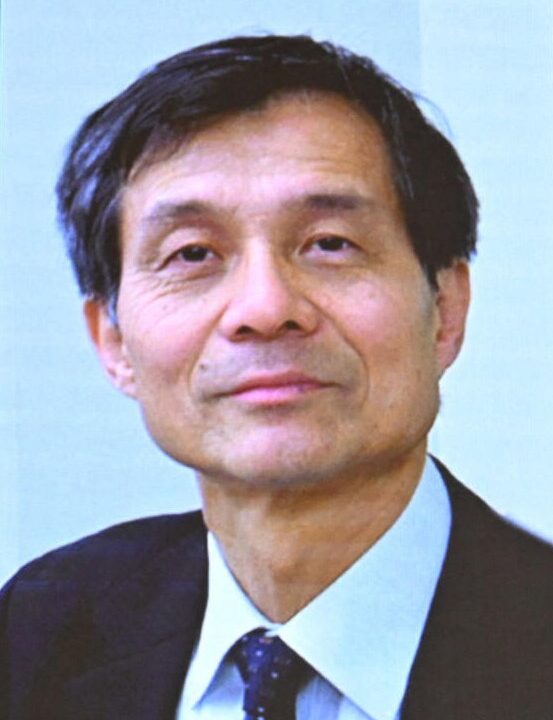
The Royal Swedish Academy of Sciences awarded the prize to Henri B. Kagan, 95, of France, and Kenso Soai, 76, of Japan. Many molecules exist in two versions that are mirror images of each other, like right and left hands — and those twins can behave very differently inside the human body. One version of a compound might treat an illness while its mirror image does nothing, or worse.
In the 1980s, Kagan showed it might be possible to design chemical reactions that favour one mirror image over the other. Years later, Soai perfected the approach, creating the first reaction to efficiently produce only the desired form — the transformation now known as the Soai reaction. Committee members called it one of the most remarkable experiments in organic chemistry, a feat previously achieved by no one other than life itself.
The practical consequences are enormous. The president of the American Chemical Society noted this week that the medicines available today would simply not be possible without this chemistry, as drug designers rely on it to build safe, effective compounds.
Soai learned of the honour in the most ordinary of settings — shopping at a neighbourhood supermarket — telling the Nobel committee by telephone that it was one of the most exciting days of his life.
The chemistry prize, announced on Wednesday in Stockholm, continues a Nobel week celebrating curiosity-driven science — from neutrino astronomy to literature. At 95, Kagan is among the oldest laureates ever honoured, a reminder that the foundations of today’s medicines were laid by researchers willing to spend decades on a single, beautiful question.