
Michigan Senate race is the clearest lead in the final battleground polls, and the clearest warning about reading polls as results. Democrat Abdul El-Sayed leads Republican Mike Rogers by 53 percent to 42 percent in the final New York Times and Siena survey, an 11 point margin that is the widest in the seven state set. A YouGov survey from October 26 to 29 found a smaller lead, 51 percent to 47 percent, still Democratic, but by four points rather than eleven. The difference between those two polls, seven points, is larger than many Senate margins, and it is why even a double digit lead should be treated as a lead, not a result.
Michigan is the only Democratic held Senate seat in the battleground set, which changes the meaning of the lead. Democrats are not trying to flip Michigan. They are trying to hold it while flipping four Republican held seats for a majority. A comfortable Michigan hold would free resources and attention for Texas, Kansas, Ohio, Maine and Alaska, where the races are closer. A Michigan scare, even in a losing effort for Republicans, would force Democrats to defend a seat they expected to hold, and would signal that the national polling lead is softer than it appears.
The state polling context supports a Democratic lean, but not complacency. National polls give Democrats a 51.5 percent to 43.1 percent lead in the generic ballot, with surveys from late October showing leads of 10 points, 13 points and seven points in the congressional preference question. Early voting nationally passed 53 million, with Michigan early voting up more than 30 percent on 2022. Those figures suggest engagement and a Democratic leaning electorate, but Michigan’s own history includes polling misses in both directions, and a state where late deciders have broken against the polling leader before.
Governor race as a second signal
Michigan governor race offers a second signal. Siena reports Democrats lead by eight or more points in the governor races in Alaska, Iowa, Maine and Michigan, a group that includes states with very different politics. If Michigan governor and Senate results move together on Tuesday, the night will confirm a Democratic leaning state. If they split, with one party winning the governor race and the other the Senate race, the split will suggest ticket splitting and candidate effects that national polls cannot capture.
The Michigan Senate poll lead should therefore be read alongside the other battleground leads, not in isolation. Texas at 50 percent to 43 percent, Kansas at 49 percent to 44 percent, Ohio at 49 percent to 44 percent, and Iowa virtually tied, all sit closer to their margins of error than Michigan does in the Times and Siena survey. Michigan is the cushion. The other states are the contest. A Senate majority will be decided by whether the cushion holds and whether at least four of the closer races break Democratic.
Tuesday in Michigan
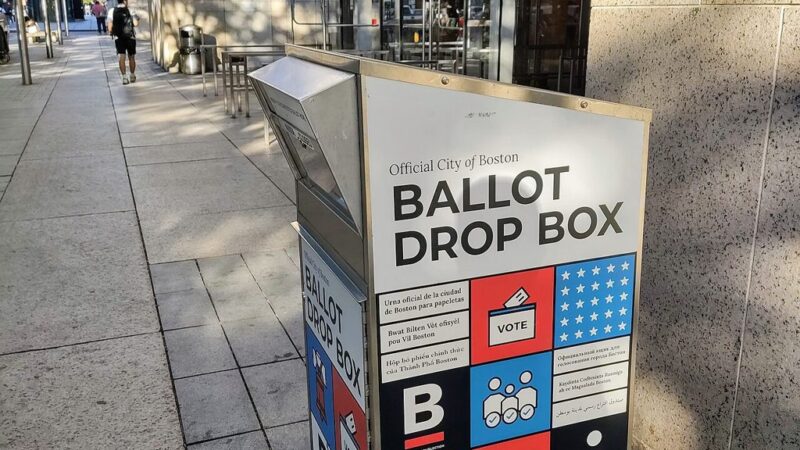
Tuesday in Michigan will test whether an 11 point poll lead, or a four point poll lead, was closer to the truth. Both point to the same winner. Neither guarantees the margin, and the margin matters for the national narrative: a wide Michigan win will be cited as proof of a wave, while a narrow win will be cited as proof of a close election that happened to break Democratic. Voters in Michigan, who have already voted early in record numbers, will decide which narrative is written, and they will decide it by ballots, not by polls.